Funnels: The Salesperson Who Never Sleeps
You cannot hire a human who works 168 hours a week for free. You can build one.
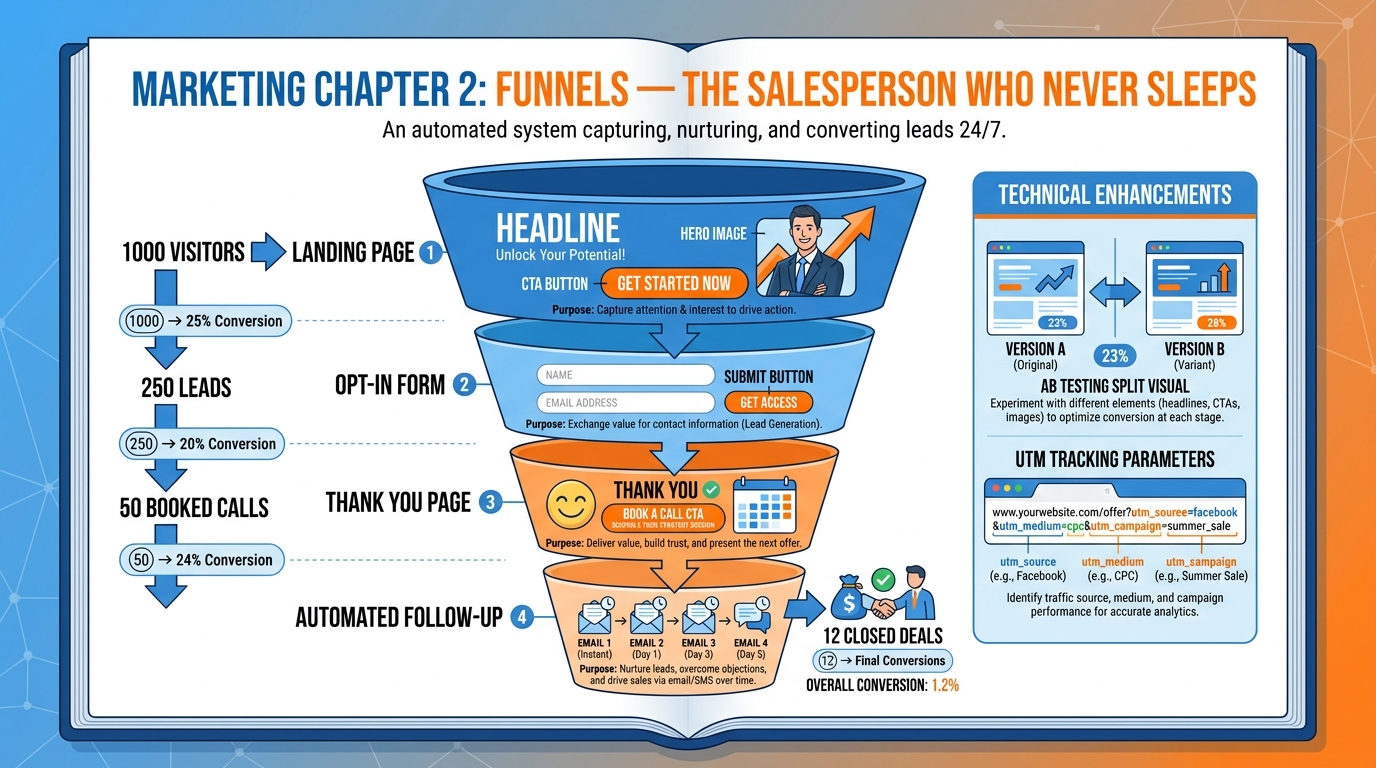
Figure 1:Figure 2.0 — The Complete Funnel at a Glance. A well-built funnel converts anonymous traffic into tagged, segmented, nurtured leads — automatically, at any hour.
Picture the best salesperson you have ever met. They know exactly what to say, in exactly the right order, at exactly the right moment. They never have a bad day, never call in sick, never ask for a raise, and never check their phone during a pitch. They qualify every lead, deliver the offer with confidence, follow up without fail, and hand the most promising prospects to you — gift-wrapped — while you sleep.
Now imagine that salesperson working twenty-four hours a day, seven days a week, in every time zone simultaneously, for the cost of a few dollars a month in software. That is not a fantasy. That is a funnel.
The marketing funnel is arguably the most powerful — and most misunderstood — concept in modern digital marketing. It is not a social media page, a website, or a brochure. A funnel is a structured sequence of pages, decisions, and automations designed to do one thing: move a stranger one deliberate step closer to becoming a customer. By the end of this chapter, you will not only understand what makes a funnel work — you will have built one.
12.1 What a Funnel Actually Is (and What It Absolutely Is Not)
The word “funnel” comes from physics. Pour liquid into the wide end; it narrows, concentrates, and exits through a small spout. In marketing, the wide end is your audience — everyone who might ever be interested in what you offer. The spout is the action you want them to take: fill out a form, book a call, make a purchase.
Everything in between is intentional friction reduction.
A funnel is not:
A website (a website invites exploration; a funnel eliminates it)
A social media profile (social builds awareness; a funnel captures commitment)
An email list (an email list is what a funnel produces, not the funnel itself)
A complicated technical project reserved for engineers
A funnel is, at its most essential, a series of web pages connected by a single intended path — with every element on every page designed to push the visitor toward the next step and nothing else.
A website is a brochure: “Here is everything we do — wander around.” A funnel is a salesperson: “I know exactly why you are here, I have exactly what you need, here is the one thing I want you to do.” That specificity is the superpower.
Funnels come in several varieties: lead-magnet funnels (give value, collect contact info), webinar funnels (register for events), sales funnels (persuade to purchase), application funnels (qualify before booking), and survey funnels (segment by answers). This chapter focuses on the lead-magnet funnel — the most common entry point for marketers, and the highest-leverage tool for building a list from scratch.
22.2 The Anatomy of a High-Converting Funnel: Page, Form, Offer, Thank You
Every effective lead-magnet funnel has four fundamental components. Remove any one of them and the machine breaks.
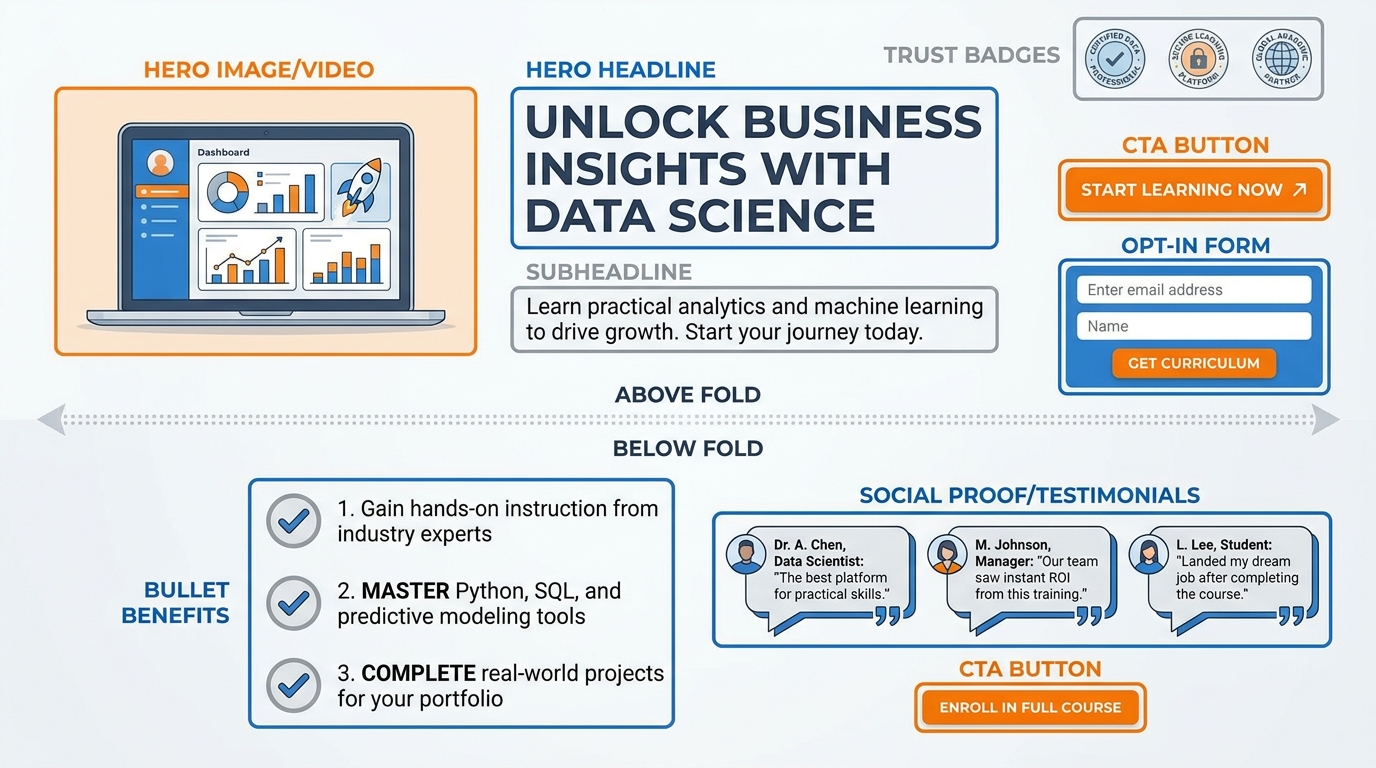
Figure 2:Figure 2.1 — Anatomy of a Landing Page. Each section serves a specific persuasive function. Nothing on a high-converting page is decorative.
1. The Landing Page This is where the prospect arrives. Unlike a homepage, it has one job: convince the visitor to fill out the form. There is no navigation menu to wander off to, no blog links, no “About Us” page, no social media icons that lead somewhere else. There is a headline, a reason to care, and a form or button.
2. The Form The form is the transaction point. The visitor exchanges their contact information for whatever you have promised them. Every field you add creates friction — so the discipline here is restraint. Ask only for what you need, in the order that feels most natural.
3. The Offer (Lead Magnet) The offer is the reason the visitor considers filling out the form at all. It is the currency of the transaction. A weak offer — “Sign up for our newsletter!” — produces weak results. A specific, high-perceived-value offer — “Download the Free 2025 Seller’s Market Checklist: 7 Things Broward Homeowners Must Do Before Listing” — produces dramatically different results.
4. The Thank-You Page This is the most neglected page in most funnels — and one of the highest-leverage opportunities in digital marketing. Most marketers show a generic “Thank you, check your email.” High performers turn it into a conversion engine (section 2.7).
32.3 Landing Pages vs. Websites vs. Funnels — Choosing the Right Shape for the Job
One of the most common and costly mistakes early marketers make is sending paid traffic — Facebook ads, Google ads, influencer links — to their homepage. The homepage was designed for people who already know you. Paid traffic brings people who have never heard of you, are mildly curious, and will leave in 8 seconds if they are not immediately captured.
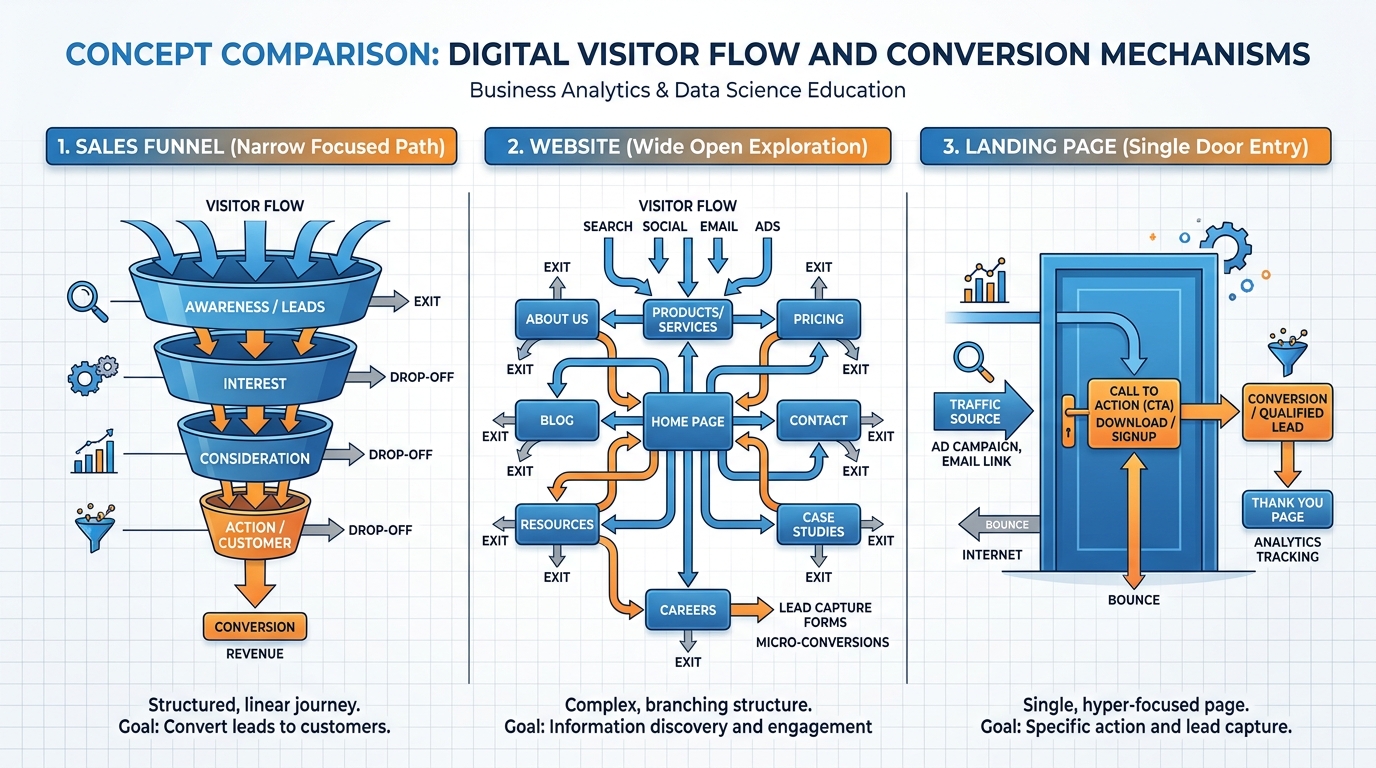
Figure 3:Figure 2.2 — Three Shapes, Three Jobs. The funnel narrows and focuses. The website opens and explores. The landing page captures a single action. Use the right tool for the traffic type.
Here is a framework for choosing:
Best for: Single-offer campaigns, paid ad traffic, event registrations.
Key characteristics:
One headline, one CTA, no navigation
Standalone URL (not connected to your main site’s navigation)
Fast to build, easy to test
Converts better than websites for cold traffic
When to use: Running a Facebook ad for a free guide, promoting a webinar registration, capturing leads for a single product.
Best for: Brand building, organic search (SEO), existing customers exploring your catalog.
Key characteristics:
Full navigation with multiple pages
Serves many different visitor intents simultaneously
Slower to iterate on
Lower conversion rate for specific actions
When to use: Someone Googles your business name, a journalist is researching you, a client wants to see your full services.
Best for: Paid traffic campaigns where you want to maximize lead value and include upsells, cross-sells, or automated follow-up sequences.
Key characteristics:
Multiple pages in a defined sequence
Each page leads only to the next
Integrated with CRM, email automation, and tagging
Highest conversion potential for serious lead generation
When to use: Any campaign where you want to turn clicks into contacts, contacts into appointments, and appointments into revenue — automatically.
Match your destination to traffic temperature. Cold strangers from a Facebook ad need a funnel. Warm visitors who typed your URL need a website. Existing customers need a product page.
42.4 The Psychology of the First Scroll: Why the Fold Still Matters
“The fold” is a term borrowed from newspaper design. When a paper is folded in half on a newsstand, only the top half is visible. Whatever appears above that fold determines whether someone picks up the paper. On a web page, “above the fold” refers to everything visible without scrolling.
Here is the uncomfortable truth that most designers ignore: the majority of visitors who will ever leave your page do so without scrolling. They decide in the first three to five seconds whether the page is relevant to their situation. If the headline does not immediately answer “What is this, and why should I care?”, they are gone.
The formula that has produced more high-converting headlines than any other:
[Specific result] + [Time frame or mechanism] + [Remove a common objection]
Example: “Download the Free MCA Funding Checklist: Qualify for 500K in Business Capital Without a Perfect Credit Score.” Notice how it speaks to a specific person with a specific problem, promises a specific outcome, and neutralizes the most obvious objection. That precision is what separates a 2% conversion rate from a 28% conversion rate.
Below the fold, the job shifts from capturing attention to building conviction — where bullet points, social proof (testimonials, logos, numbers), and detailed offer explanation earn their keep.
52.5 Forms That Convert: Length, Logic, and the Magnetic Field Name
The form is the moment of commitment. Everything before it built interest; the form closes the transaction.
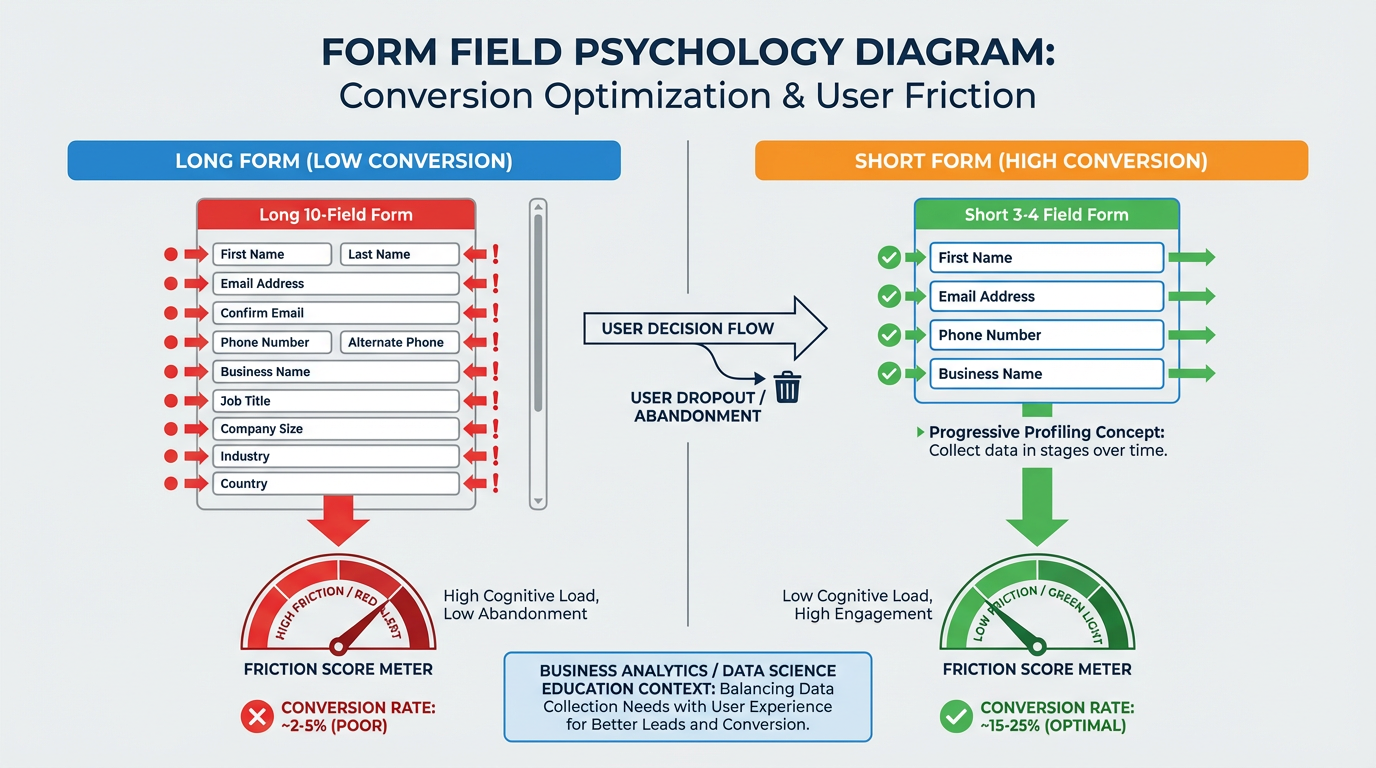
Figure 4:Figure 2.3 — Form Field Psychology. Every additional field reduces conversion rate. Design forms for the minimum viable ask, then collect more data over time through progressive profiling.
Every field you add to a form reduces the number of people who complete it. This is not an opinion — it is one of the most consistent findings in conversion rate optimization research. The question is not “what information do we want?” but “what is the minimum we need to follow up effectively?”
For a lead-magnet funnel, four fields is the sweet spot for most markets:
First Name — needed for personalization
Email Address — the primary follow-up channel
Phone Number — enables SMS, calling, and higher-value follow-up (optional for lower-friction markets)
One qualifying field — something that tells you about the lead’s situation (e.g., “Business Name,” “What city are you in?,” “Monthly revenue range”)
Conditional logic adapts the form based on answers: if a visitor selects “I already have a business,” reveal fields relevant to that segment; if they select “I’m just starting out,” show different fields. The visitor only sees what is relevant; the data you collect is higher quality. VibeReach.io supports conditional logic natively.
62.6 Offers, Lead Magnets, and the Value Ladder
The single biggest driver of opt-in rate is offer quality. You can have the most beautifully designed landing page in the world and a perfectly written headline — but if the offer is weak, the page converts poorly. This is why “Subscribe to Our Newsletter” fails every time: there is no specific value promised, no immediate gratification, and no proof that subscribing will change anything in the visitor’s life.
Effective lead magnets share three properties: specificity (solves a precise problem for a precise person), immediacy (value is deliverable and usable right now), and high perceived value at low delivery cost (a PDF checklist costs nothing to produce; if it solves a real problem, its perceived value is high).
Proven lead magnet formats include: checklists (short, scannable, immediately actionable), guides or mini e-books (deeper, good for complex topics), templates (saves the prospect work), calculators or quizzes (interactive, personalized output), video trainings, and webinars (highest commitment, highest lead quality).
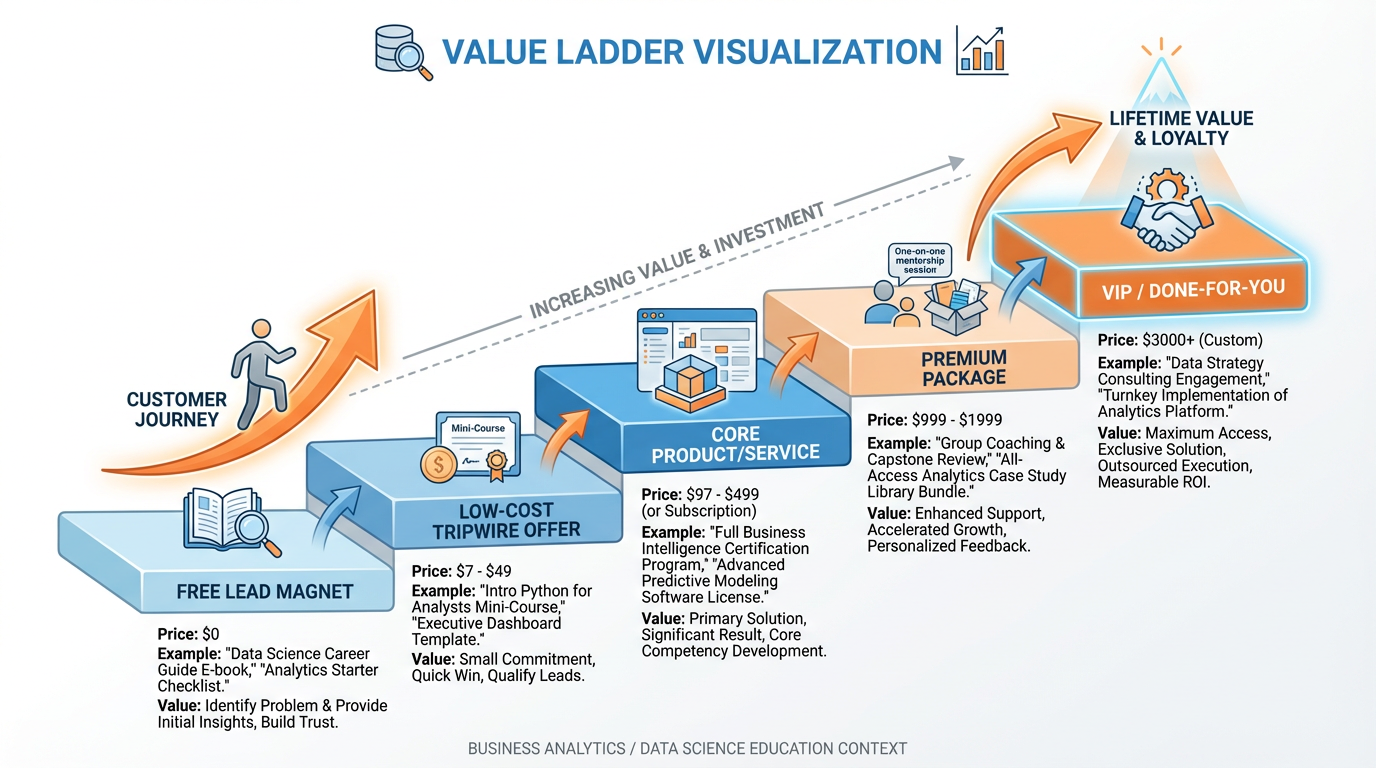
Figure 5:Figure 2.4 — The Value Ladder. Every funnel is an entry point to a longer relationship. The lead magnet earns the first step; the value ladder earns the lifetime customer value.
Behind every lead magnet is a value ladder — the ascending sequence of offers converting a new contact into a long-term customer. The free checklist earns trust. The 500/month retainer is where real revenue lives. No one buys the retainer from a cold ad; they buy it after the funnel has done its job as the on-ramp.
72.7 Thank-You Pages as Conversion Engines (Not Dead Ends)
Most thank-you pages read like an out-of-office reply: “Thank you! Check your email.” That is a missed opportunity of the highest order. The visitor who just submitted your form is at the peak of their engagement. They trust you enough to give you their information. Their attention is highest, their skepticism is lowest, and they are not going anywhere yet.
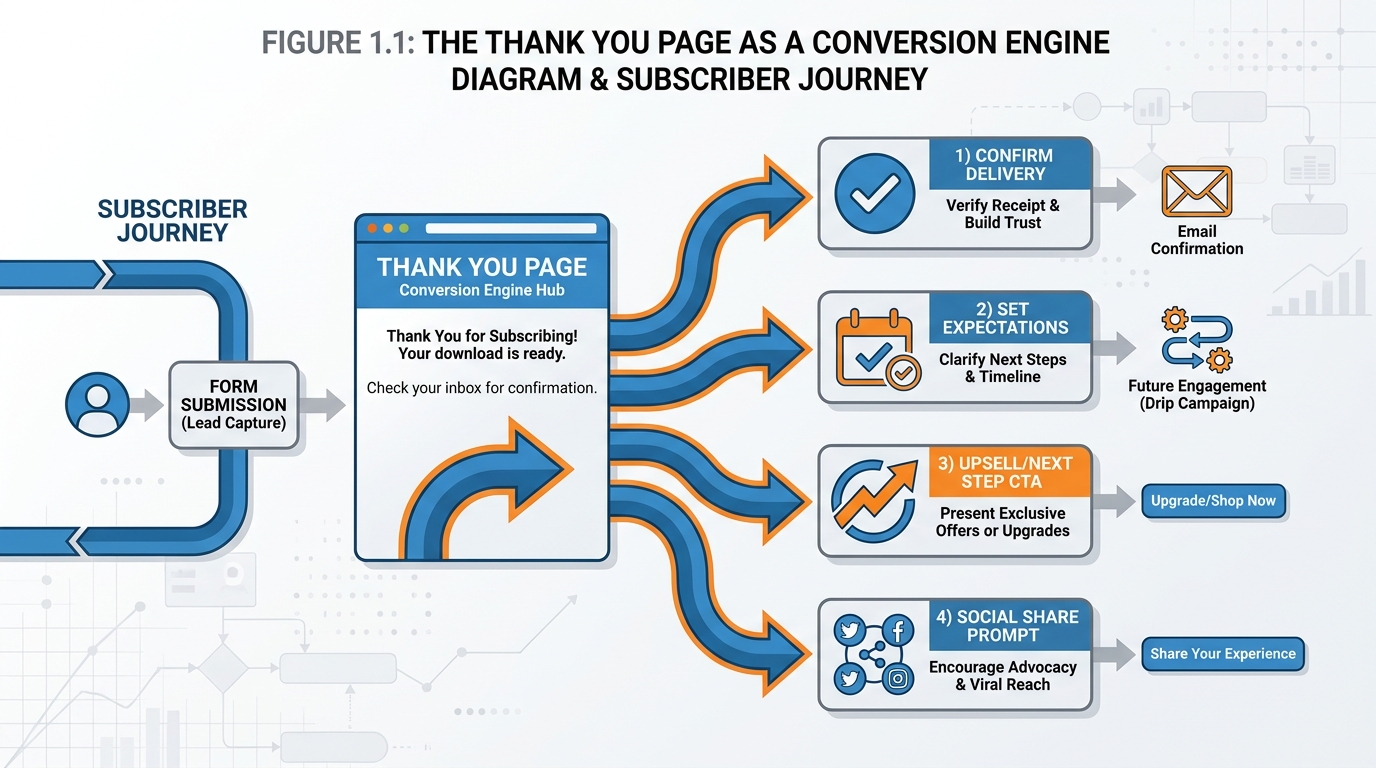
Figure 6:Figure 2.5 — The Thank-You Page as Conversion Engine. Do not waste the highest-trust moment in your funnel with a dead-end message. Turn it into the next step.
A high-performing thank-you page does four things: (1) Confirms the transaction (“Your checklist is on its way!”) — setting expectations and reducing anxiety. (2) Sets expectations for follow-up (“Over the next few days you’ll receive...”) — priming the contact for your sequence and reducing unsubscribes. (3) Offers a logical next step — a one-time offer (47) converts a percentage of free leads into paying customers before they leave the page, or a calendar link (“Book your free 15-minute strategy call”) books them while engagement is highest. (4) Requests a micro-commitment — “Join our private Facebook group” or “Share this with a business owner friend” deepens the relationship and expands reach at zero ad cost.
82.8 A/B Testing Without Losing Your Mind
A/B testing (also called split testing) is the practice of showing two versions of a page to different visitors and measuring which version drives more of your desired action. It is the engine of continuous improvement in funnel marketing.
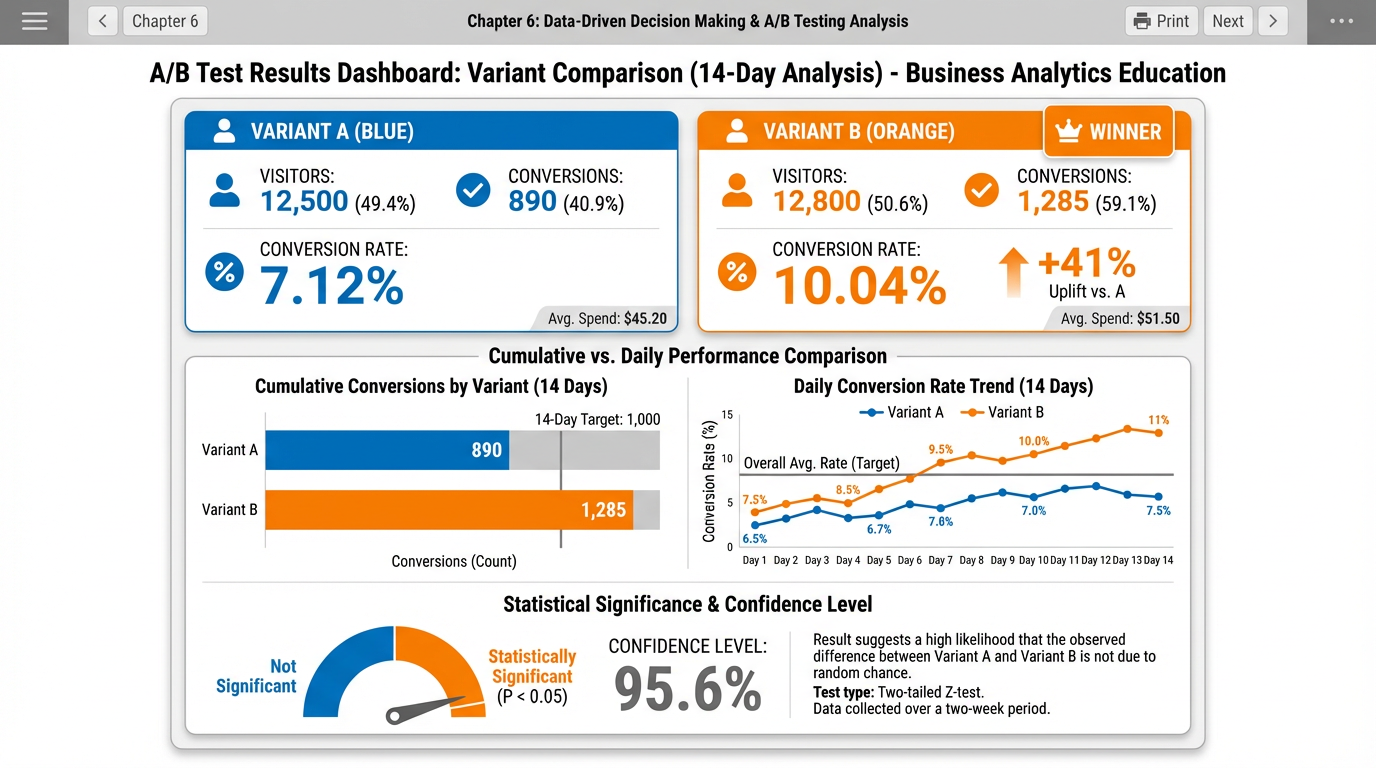
Figure 7:Figure 2.6 — A/B Test Results Dashboard. Run tests long enough to reach statistical significance before declaring a winner. Premature conclusions lead to wrong decisions.
The most common mistake beginners make with A/B testing is testing too many things at once. If you change the headline, the button color, the form length, and the hero image simultaneously and conversion rates improve, you have no idea which change caused the improvement. Worse: some of those changes may have hurt performance while others helped enough to offset the damage.
The golden rule of A/B testing: change one variable at a time.
Test elements in this priority order: headline (largest swings), hero image or video, CTA button copy, form length, social proof placement, and page layout. Run each test until you have at least 200–300 conversions across both variants, or until the tool reports 95%+ statistical significance. Ending early — even when a variant looks like a clear winner on day three — is one of the most common and costly errors in optimization.
92.9 Funnel AI: Building a Page With a Sentence
The arrival of large language models and generative AI tools has fundamentally changed how quickly a solo marketer or small team can build, test, and iterate on funnels. What once required a copywriter, a designer, a developer, and two weeks of back-and-forth can now be accomplished in an afternoon by one person with a clear prompt.
VibeReach.io integrates AI directly into its page builder. Describe your offer in plain language and receive a fully structured draft page — headline, subheadline, bullets, CTA, and form recommendations — that you then customize. This does not replace judgment; it accelerates it.
The critical skill is prompting with specificity. “Write a landing page for my business” produces generic output. “Write a landing page for a free 7-point checklist helping Broward County business owners with over $20,000/month in revenue qualify for MCA funding — targeting restaurant owners who’ve been denied before” produces something usable in minutes.
102.10 Tracking, Pixels, and UTM Discipline from Day One
You cannot optimize what you cannot measure. This principle, applied rigorously from the first day of your funnel’s existence, is what separates marketers who improve over time from those who repeat the same mistakes for years.
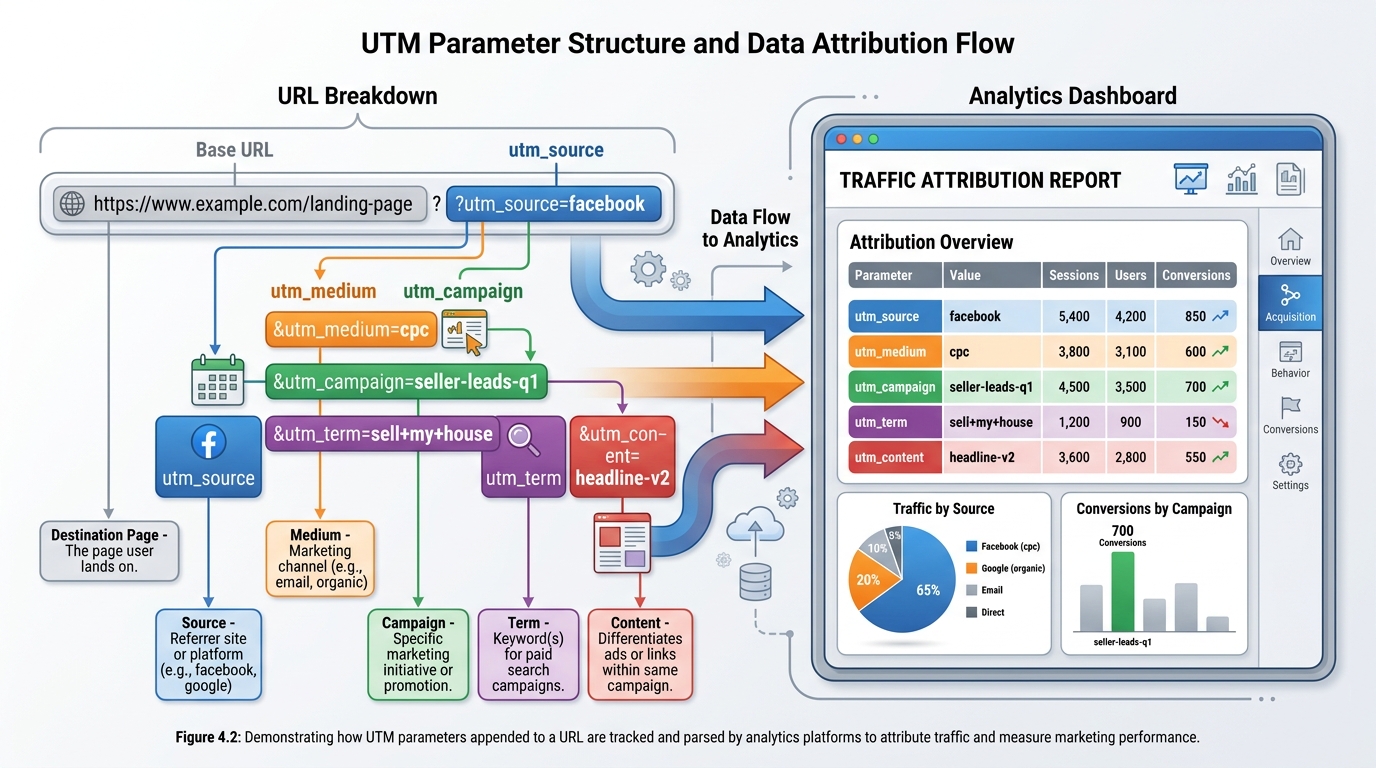
Figure 8:Figure 2.7 — UTM Parameter Structure. Tag every link before you launch. Attribution data is perishable — you cannot go back and reconstruct it after the fact.
A properly tagged URL for a Facebook ad might look like this:
https://vibereach.io/mca-funding-checklist?utm_source=facebook&utm_medium=paid-social&utm_campaign=mca-leads-q1&utm_content=headline-v2This single URL tells you the traffic came from Facebook, via a paid social ad, in the Q1 MCA campaign, from the headline-v2 creative. Without UTM parameters, all of that collapses into “Direct Traffic” — and you have no idea which ads, audiences, or creative drove results.
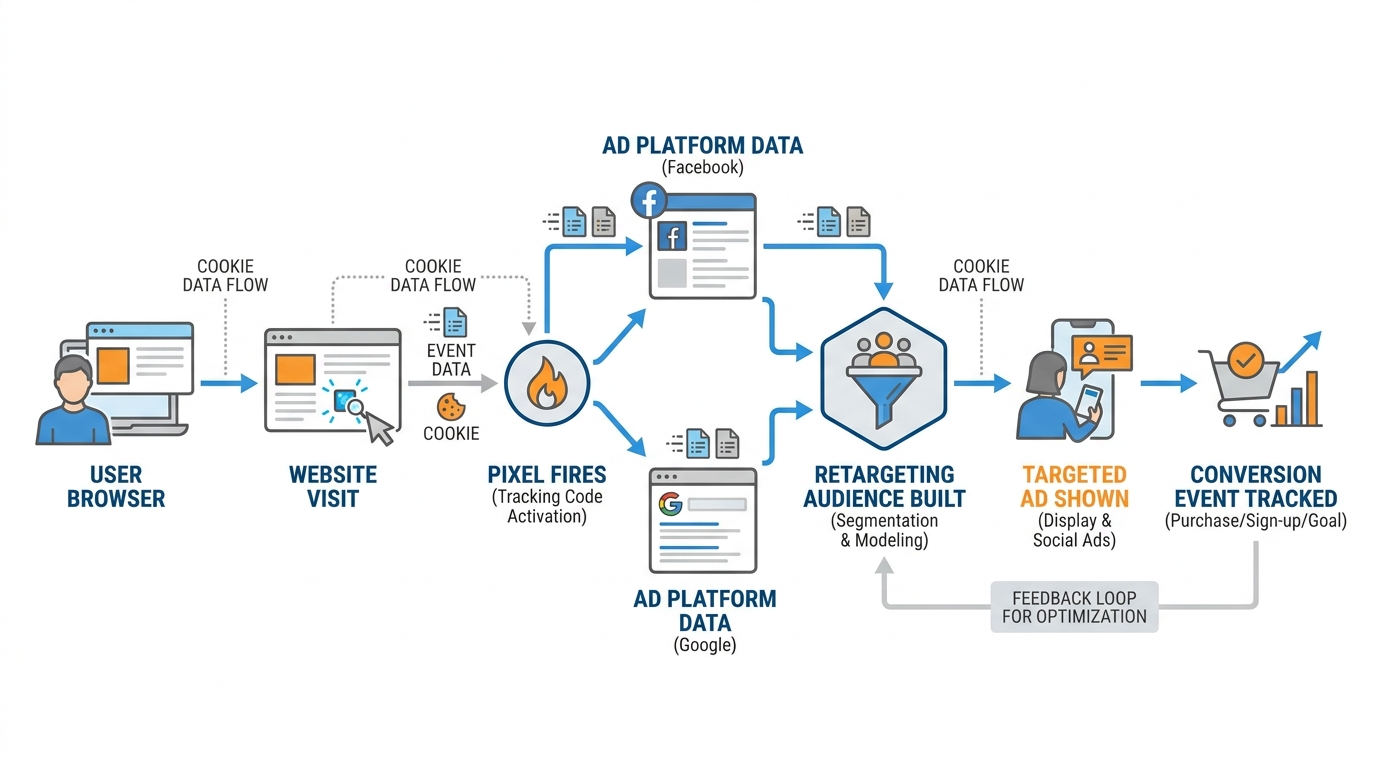
Figure 9:Figure 2.8 — Pixel Tracking Flow. The pixel is the intelligence layer of your ad campaigns. Without it, you are advertising blind.
Tracking pixels work alongside UTM parameters. A pixel is a small JavaScript snippet placed on your funnel pages that fires when a visitor arrives or completes an action. This data flows back to ad platforms — Facebook, Google, TikTok — enabling retargeting (re-engaging visitors who did not convert), lookalike audience building (finding people similar to your converters), and conversion tracking (telling the platform’s machine learning which ads produced results).
Install your pixel before running your first ad. Configure standard events — PageView, Lead, Purchase — at minimum. It takes thirty minutes and compounds in value for the entire life of your campaigns.
112.11 Case Study: A Solo Real Estate Agent, One Funnel, 214 Seller Leads in 90 Days
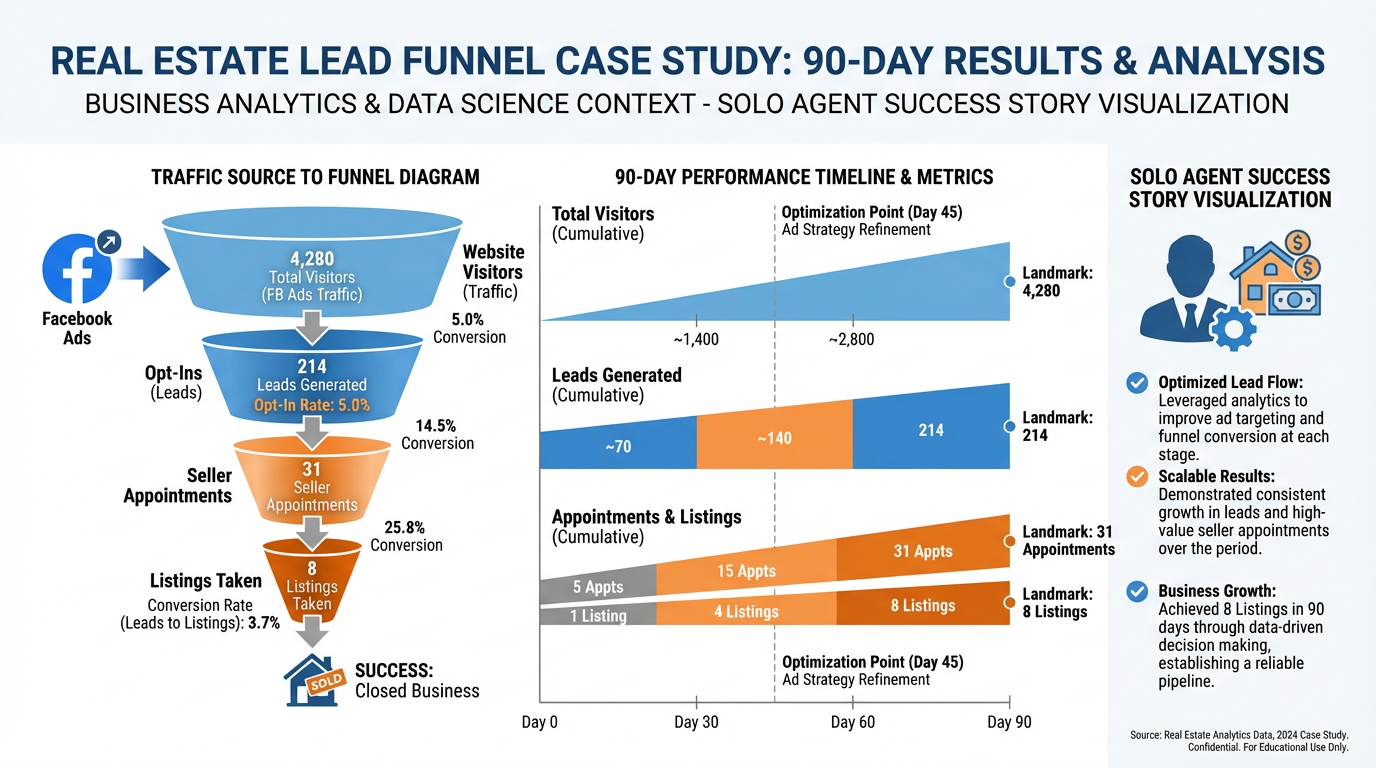
Figure 10:Figure 2.9 — Case Study Results. A solo agent, one funnel, and a $15/day Facebook ad budget produced 214 qualified seller leads in 90 days — without a marketing team or technical background.
Maria runs a solo real estate operation in Broward County. She had a website, a Facebook page, and referrals — but no systematic lead generation. She spent 100 per lead, no follow-up system.
She built one funnel. One landing page, one form, one thank-you page, one automated email sequence. The lead magnet: “The Broward Seller’s Advantage: 5 Things Most Agents Won’t Tell You Before You List.”
The funnel: Facebook ads targeting Broward homeowners ages 35–65, HHI above 15/day budget. A neighborhood-specific headline, three benefit bullets, and a four-field form (Name, Email, Phone, Property Address). Form submission delivered the PDF and redirected to a thank-you page offering a free home value call. Seven-email + three-SMS automated follow-up sequence over 14 days.
Results over 90 days:
Total visitors: 4,280 | Opt-in rate: 5.0% | Leads: 214
Seller appointments: 31 | Listings taken: 8
Cost per lead: 47,200
The shift was not technical. Maria used a template she modified in an afternoon. The shift was architectural: she stopped sending traffic to a website and started sending it to a machine designed to do one thing — capture a lead. That machine ran while she was showing properties. It ran while she slept. It never forgot to follow up, never got nervous, never had a bad day. That is the salesperson who never sleeps.
122.12 Lab 2: Build a Lead-Magnet Funnel End to End — Page, Form, Offer, Confirmation
A lead-magnet funnel is the engine that converts cold traffic into named, tagged contacts in your CRM. In this lab, you build a complete two-page funnel — a landing page with an opt-in form, and a thank-you page — then wire it to a workflow trigger so every submission automatically creates a contact, delivers the lead magnet, and starts the follow-up sequence. By the end, you will have a live, working funnel URL you can send traffic to today.
12.1Step 1: Create the Funnel
In the left sidebar, click Marketing → Funnels.
Click + New Funnel in the upper right.
When prompted “Start from Scratch or Import?”, click Import from File.
Upload
lab02-funnel-template.json→ click Import.
If you prefer to build from scratch:
Click + New Funnel → Start from Scratch.
Funnel Name:
Lab 2 — Lead Magnet Funnel→ click Create Funnel.You are taken to the funnel steps view. Click + Add Step.
You’ll know you did this right when: A funnel appears in your Funnels list with the name you entered and shows “0 Steps” (before you add pages) or the imported template structure.
12.2Step 2: Build (or Customize) the Landing Page
In your funnel, click + Add Step (or click the existing first step if you imported the template).
Name this step:
Opt-In Page→ select Funnel Page type → click Create Step.Click Edit Page to open the page builder.
In the builder, configure:
Headline: Clear benefit statement — e.g., “The 5-Step Checklist to Get Your Business Funding-Ready in 7 Days”
Sub-headline: One sentence expanding on the benefit — e.g., “Download the exact checklist our consultants use before every funding application”
Body text: 2–3 bullet points listing specific things the lead magnet helps with
Click Save in the builder.
You’ll know you did this right when: The landing page preview shows your headline and bullet points. The page is readable on both desktop (preview button, desktop icon) and mobile (preview button, mobile icon).
12.3Step 3: Add the Opt-In Form
In the page builder, locate the form element (it will already exist if you imported the template, or click the Form element from the left elements panel and drag it to the page).
Click the form element to select it → click Edit Form Fields.
Configure form fields:
First Name — required
Email — required
Phone (optional — collect if your follow-up includes SMS)
Set the submit button text to something action-oriented: “Send Me the Checklist” or “Get Instant Access”
Click Save.
You’ll know you did this right when: The form shows First Name, Email (and Phone if added), and a clearly labeled submit button. The form is linked to the funnel — not a standalone form.
12.4Step 4: Configure Form Submission Action
Click the form in the builder → click Edit Form Settings.
Under On Submit, select Redirect to URL or Redirect to Funnel Step.
Select Redirect to Funnel Step → choose Thank You Page (the next step you will add in Step 5).
Under Notifications, enable email notification to yourself so you know when leads come in.
Click Save.
You’ll know you did this right when: The form’s submission action shows “Redirect to Thank You Page” (or whatever you name the second step).
12.5Step 5: Build the Thank-You Page
Back in the funnel steps view, click + Add Step.
Name:
Thank You Page→ type: Funnel Page → Create Step.Click Edit Page.
Configure:
Headline: “You’re in! Check Your Email.” or “Your checklist is on its way!”
Body: Tell the lead exactly what happens next: “Your [Lead Magnet Name] is headed to your inbox right now. While you wait, here’s your next step: [one clear CTA — book a call, watch a video, etc.]”
Optional: embed a Calendly or GHL calendar widget for immediate appointment booking
Click Save.
12.6Step 6: Connect a Workflow Trigger
In the left sidebar, click Automation → Workflows.
Click + New Workflow → Start from Scratch.
Name:
Lab 2 — New Lead Magnet Opt-In→ Create Workflow.Click + Add New Trigger → search for Form Submitted → select it.
In the trigger configuration: Filters → Form Name → is → [your Lab 2 opt-in form name].
Click Save Trigger.
Add Action → Add Tag → tag:
lead-magnet-download.Add Action → Send Email → configure a delivery email with your lead magnet PDF attached.
Click Save Action → toggle the workflow to Active → click Publish.
You’ll know you did this right when: The workflow shows “Active” status and the trigger is linked to your specific funnel form.
12.7Step 7: Get the Funnel URL and Test End to End
Back in the funnel, click the ⚙️ settings icon for the Opt-In Page step.
Set a custom path (URL slug) — e.g.,
free-checklistorget-started.If your domain is connected: the full URL becomes
yourdomain.com/free-checklist.Copy the funnel URL.
Open the URL in a new incognito browser window.
Complete the form with a test email address (use your own).
Verify: you are redirected to the Thank-You page, you receive the delivery email, and a new contact appears in GHL with the
lead-magnet-downloadtag applied.
You’ll know you did this right when: A test submission creates a new contact in your CRM with the tag applied, the delivery email arrives with the lead magnet, and you’re redirected to the thank-you page.
Troubleshooting Common Issues
Form submission doesn’t redirect to the thank-you page: Verify the form’s “On Submit” action is set to “Redirect to Funnel Step” and the thank-you page step is selected. If the form redirects to a blank page or the same page, check the submission action setting in the form builder.
Test contact was created but the tag wasn’t applied: The workflow may not have fired. Check that the workflow is Active (not Draft). Verify the trigger filter specifies the correct form name. Open the workflow execution log to see if it triggered and any errors that occurred.
The delivery email didn’t arrive: Check your spam folder. Verify the Send Email action in the workflow uses your verified sending domain. If the email sending domain shows “Unverified,” return to Lab 0 and complete the email authentication setup.
The funnel URL shows a 404 error: Verify your domain is connected to VibeReach.io (Settings → Domains → should show “Verified”). Check that the funnel step’s URL slug doesn’t contain spaces or special characters. A fresh domain may need up to 48 hours for DNS propagation.
The form import template doesn’t load: If the JSON import fails, build the funnel from scratch using the step-by-step instructions. The template is a convenience — all the same elements are available manually in the builder.
Mobile preview looks broken: All GHL page builder elements are responsive by default, but custom font sizes and manual spacing adjustments can break mobile layout. Use the Mobile Preview button (phone icon in the page builder toolbar) to check after each major edit. Reduce font sizes and column widths for elements that look oversized on mobile.
132.13 Chapter Takeaways & Reflection Questions
13.1Chapter Takeaways
A marketing funnel is a structured, intentional conversion machine that moves a stranger toward a specific action by removing every distraction and friction point between the visitor and the outcome you want. Its four essential components — landing page, form, offer, and thank-you page — each serve a distinct persuasive function; neglecting any one degrades performance predictably.
Offer quality is the single greatest predictor of opt-in rate. A specific, immediately valuable lead magnet consistently outperforms a generic “subscribe” prompt by five to ten times. The thank-you page is the highest-trust moment in your funnel and the most underutilized — a well-designed one converts free leads into booked calls before visitors leave your domain.
A/B testing produces compounding returns only with discipline: one variable at a time, sufficient traffic, and statistically significant results before declaring a winner. UTM parameters and tracking pixels are not optional — they are the measurement infrastructure that makes optimization possible. Install them on day one.
13.2Reflection Questions
Think about a business you admire. Does it have a funnel? What would a lead-magnet funnel look like for its most common customer acquisition scenario?
Why does sending paid traffic to a homepage produce lower conversion rates than sending it to a dedicated landing page? What does this reveal about visitor intent and page design?
A colleague argues forms should collect as much information as possible upfront to save sales time. How would you respond using what you know about form friction and progressive profiling?
The case study showed a cost per lead of $6.31. Which funnel variables — offer, headline, form length, traffic targeting, or follow-up — had the greatest impact on that number? Why?
Describe a scenario from any industry where a funnel outperforms a traditional sales process. What does the funnel do that a human salesperson cannot?
13.3Exercises
---

## Discussion

### Is the Marketing Funnel Ethical? Persuasion, Autonomy, and the Responsibility of the Marketer

Marketing funnels are engineered to reduce friction, trigger emotion, and guide prospects toward a decision. Critics argue this architecture manipulates consumer behavior and exploits cognitive biases. Proponents contend a well-built funnel simply makes it easier for the right person to find the right solution — and that persuasion is not inherently coercive.

Where do you stand? Is the intentional design of a funnel — urgency timers, one-time offers, headlines crafted to trigger desire or fear of loss — an ethical use of behavioral science? Or does it cross a line that traditional advertising did not? What guardrails would you apply in your own practice?

> **Discussion Guidelines:** Write a substantive response of at least 200 words addressing the prompt above. Include at least one scholarly or credible citation (journal article, textbook, or authoritative industry report) to support your argument. Then respond to at least TWO peers with substantive feedback — go beyond "I agree" and explain why their perspective adds to or challenges your thinking.

---

## Glossary

**A/B Test (Split Test):** A controlled experiment comparing two versions of a page or element to determine which produces superior conversion results.

**Above the Fold:** The portion of a web page visible without scrolling; receives the highest viewer attention and most heavily influences bounce rate.

**Call to Action (CTA):** A button or instruction directing the visitor toward a desired next step. Effective CTAs use action verbs and confirm the value of clicking.

**Conditional Logic:** A form feature that shows or hides fields based on previous answers, enabling personalized data collection without increasing visible form length.

**Conversion Event:** A specific visitor action that registers as a successful outcome — form submission, button click, purchase, or booking.

**Conversion Rate:** The percentage of visitors who complete a desired action: (conversions ÷ unique visitors) × 100.

**Funnel:** A structured sequence of web pages, forms, and automated follow-up actions guiding a prospect through a conversion journey toward a specific outcome.

**Lead Magnet:** A free resource or incentive offered in exchange for contact information, designed to demonstrate authority and qualify interest.

**Lookalike Audience:** An ad targeting option that finds new prospects sharing behavioral and demographic characteristics with existing converters.

**Opt-In Rate:** The percentage of landing page visitors who complete and submit the opt-in form.

**Pixel:** A JavaScript snippet placed on web pages that fires tracking events to ad platforms, enabling retargeting, conversion tracking, and audience building.

**Progressive Profiling:** Collecting contact data across multiple interactions rather than all at once, reducing initial friction while building a complete profile over time.

**Retargeting:** Showing ads to people who previously visited your funnel but did not convert, using pixel data to re-engage them.

**Statistical Significance:** In A/B testing, the confidence threshold (typically 95%) at which observed performance differences are unlikely to be caused by random chance.

**Thank-You Page:** The page shown after form submission — a confirmation of the transaction and a conversion opportunity for the next step in the value ladder.

**UTM Parameters:** URL tags (utm_source, utm_medium, utm_campaign, utm_term, utm_content) identifying traffic origin and context for attribution and optimization.

**Value Ladder:** The ascending sequence of offers — from free to high-ticket — defining the customer journey and path toward increasing lifetime customer value.

**Workflow:** An automated action sequence triggered by a specific event (such as form submission), executing tagging, email delivery, or CRM updates without manual intervention.

---

## 🎯 Your Turn: Apply It to Your Business

You just learned how a funnel works — the anatomy, the psychology, the A/B testing, the UTM structure. Now stop theorizing and go build one for your actual offer. A funnel that doesn't exist converts at exactly zero percent.

**1. Map your current lead capture process.**
Right now, before opening GHL, write down how a brand-new stranger becomes a contact in your business. Do they fill out a form on your website? Call a number? DM you on Instagram? For each method: Is there a thank-you page? Does it trigger any automation? Does the contact get tagged? Most businesses discover they have three or four entry points with zero automation attached. Pick the highest-traffic one. That's your funnel rebuild target.

**2. Define your lead magnet before you build the page.**
A funnel is only as strong as what it's offering. In GHL → **Sites → Funnels**, before clicking "+ New Funnel," write down: What is the specific thing someone gets in exchange for their email? Why would your ideal customer want it badly enough to give up their contact info? Is it a checklist, a calculator, a free audit, a guide, a webinar seat? If you can't answer "my ideal customer wants this because ___" in one sentence, don't build the funnel yet — sharpen the offer first.

**3. Build your opt-in page headline using the Four-Part Formula.**
Draft at least three headline options for your landing page using this structure: [Specific Result] + [Timeframe] + [Without Pain Point] + [For Audience]. Example: "Get Your First 10 Qualified Leads in 14 Days — Without Running a Single Ad — Even If Your Pipeline Is Completely Dry." Write all three. Pick the sharpest one. That headline goes above the fold on your funnel page.

**4. Set up UTM parameters for your top traffic source.**
In Google's Campaign URL Builder (or GHL's built-in UTM tool), create a tracked URL for the funnel you're building or your current opt-in page. Use: `utm_source` = the platform (facebook, google, email), `utm_medium` = the type (paid, organic, newsletter), `utm_campaign` = the campaign name. Save this URL. Every link you post for this funnel should use it so attribution is clean from day one.

**5. Create your thank-you page and set a next-step action.**
A thank-you page that just says "Thanks, check your email!" is a wasted opportunity. In your GHL funnel, build or update your thank-you page with: (a) confirmation of what they'll receive, (b) a specific next step (book a call, watch a video, join a group), and (c) a soft introduction to your story or credibility. The thank-you page is the second most-viewed page in your funnel — treat it like it matters.

:::{admonition} 🏋️ Stretch Challenge
:class: tip
Set up an A/B test on your headline. In GHL → **Sites → Funnels**, duplicate your landing page step and change only the headline. Run both versions with equal traffic for two weeks. Track opt-in rate for each variant. Document which won and by how much. Then apply the winning headline, run another test on your CTA button copy, and repeat. This compounding optimization process is how top marketers squeeze 40%+ more leads from the same traffic without spending a dollar more on ads.