Chapter 8: AI Applications & the Future of Work
Chatbots, Digital Twins, Supply Chain AI, Healthcare AI, and Preparing for an AI-Powered Career
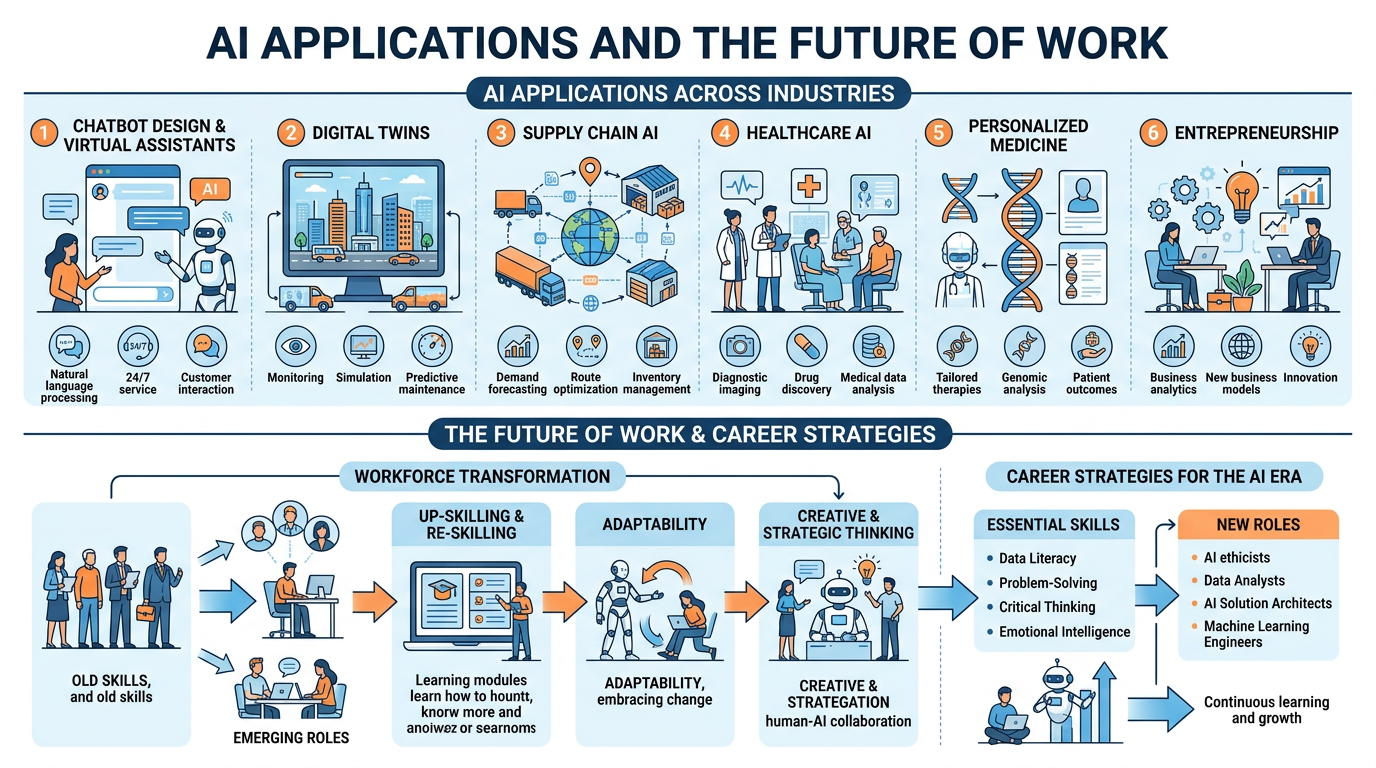
Figure 1:An illustrated overview of this capstone chapter — from AI-powered chatbots and digital twins to healthcare transformation and career strategies for an AI-driven world.
“For I know the plans I have for you,” declares the LORD, “plans to prosper you and not to harm you, plans to give you hope and a future.”
Jeremiah 29:11 (NIV)
We have arrived at the final chapter of our journey through AI for business. Over the preceding seven chapters, we built a foundation of understanding — from the fundamentals of artificial intelligence and deep learning, through natural language processing, machine learning, computer vision, ethics, robotics, and cybersecurity. Now it is time to bring it all together and look forward.
This chapter serves two purposes. First, we explore four transformative AI application areas that are reshaping industries right now: chatbot design (the frontline of AI-human interaction), digital twins (virtual replicas that revolutionize planning and operations), supply chain AI (intelligent logistics and demand forecasting), and healthcare AI (personalized medicine, diagnostics, and drug discovery). We also examine how AI is creating entirely new opportunities for entrepreneurship — lowering barriers to entry, enabling one-person companies to compete with enterprises, and creating markets that did not exist five years ago.
Second, and perhaps more importantly for you personally, we confront the question that has hovered over this entire course: What does the future of work look like, and how do you prepare for it? The AI revolution is not something happening to other people in other industries — it is happening to you, to your career, to the jobs you will hold and the businesses you will build. Understanding this reality and developing a proactive strategy is not optional.
As Christians, we face this future not with anxiety but with confidence — grounded in the assurance of Jeremiah 29:11 that God has plans for our flourishing. But divine plans do not exempt us from human responsibility. We are called to be wise, diligent, and prepared. This chapter will help you do exactly that.
1Chatbot Design and Conversational AI
1.1The Evolution of Chatbots
Chatbots have evolved dramatically from the early rule-based systems that could only respond to specific keywords to today’s sophisticated AI assistants that engage in nuanced, context-aware conversations.
The chatbot evolution:
1.2Anatomy of a Modern Chatbot
A well-designed chatbot is far more than a language model with a text box. It is an engineered system with multiple interconnected components:
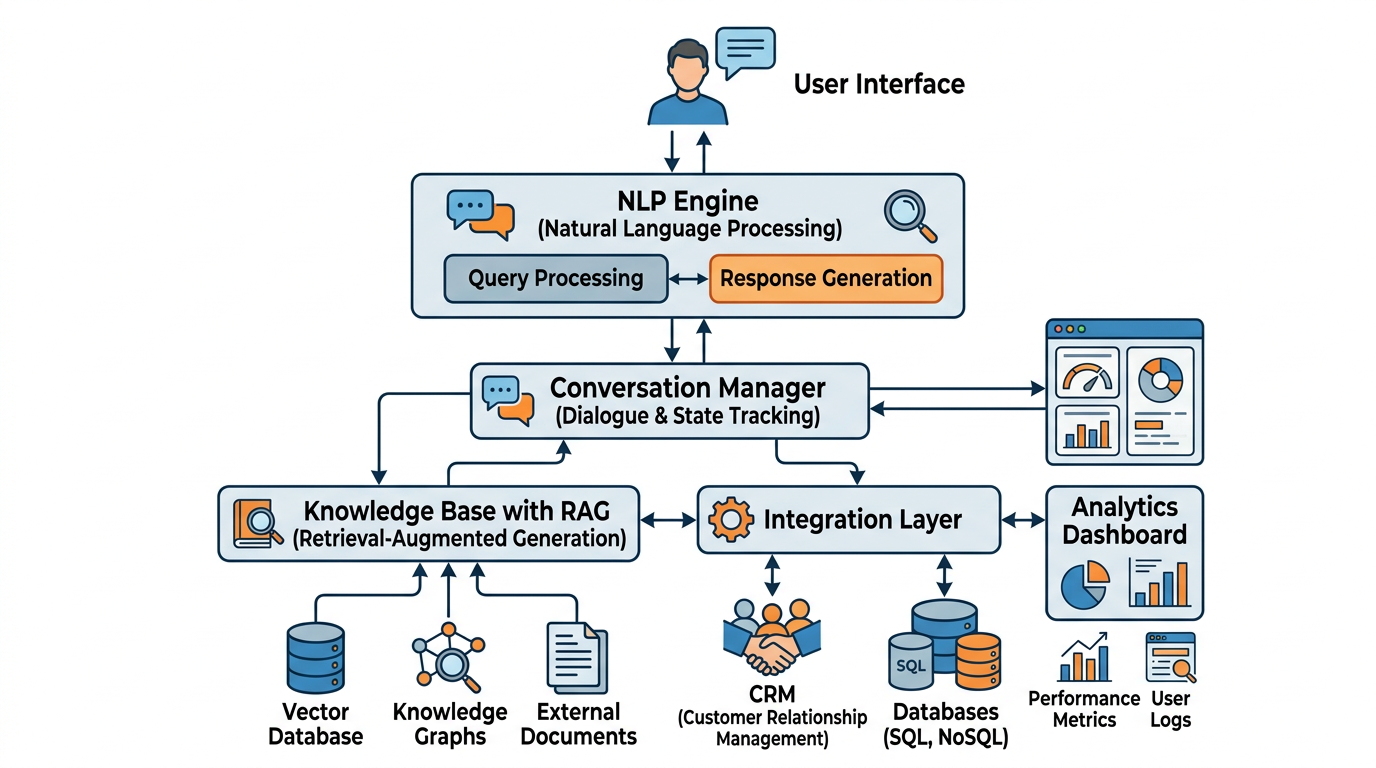
Figure 2:The architecture of a modern AI chatbot — multiple components working together to deliver natural, helpful, and reliable conversational experiences.
Understanding What Users Mean
The NLU component processes user input to extract:
Intent — What the user wants to accomplish (e.g., “check order status,” “file a complaint,” “schedule appointment”)
Entities — Specific details in the message (e.g., order numbers, dates, product names)
Sentiment — The emotional tone of the message (positive, negative, frustrated)
Context — Information from previous turns in the conversation
Modern LLM-based chatbots handle NLU implicitly through their trained language understanding, but explicit intent/entity classification remains valuable for structured business processes.
The Chatbot’s Memory
The knowledge base provides the chatbot with domain-specific information:
FAQ databases — Common questions and approved answers
Product catalogs — Details about products and services
Policy documents — Company policies, terms of service, procedures
RAG (Retrieval-Augmented Generation) — Real-time retrieval of relevant documents to ground LLM responses in factual information
Why it matters: Without a knowledge base, chatbots rely entirely on their training data, which may be outdated, inaccurate, or irrelevant to your specific business. RAG systems solve this by retrieving current, authoritative information before generating responses.
Orchestrating the Flow
The conversation manager controls the interaction:
Dialog state tracking — Remembering what has been discussed
Turn management — Deciding when to ask clarifying questions
Escalation logic — Determining when to transfer to a human agent
Multi-turn reasoning — Maintaining coherent conversations across many exchanges
Guardrails — Preventing the chatbot from making unauthorized commitments or sharing sensitive information
Connecting to Business Systems
The integration layer enables the chatbot to take real actions:
CRM systems — Access customer records, update accounts
Order management — Check order status, process returns
Scheduling — Book appointments, check availability
Payment systems — Process transactions securely
APIs — Connect to any external service
The difference between a chatbot and an AI agent: A chatbot that can only answer questions provides limited value. A chatbot integrated with business systems that can actually resolve issues — process a return, reschedule a delivery, issue a credit — provides transformative value.
1.3Chatbot Design Best Practices
Principles for effective chatbot conversations:
Set expectations clearly — Tell users what the chatbot can and cannot do upfront
Use natural language — Avoid robotic, template-like responses
Handle errors gracefully — “I’m not sure I understood. Could you rephrase?” is better than a generic error
Provide escape hatches — Always offer a path to a human agent
Be honest about limitations — “I don’t have access to that information” builds more trust than a wrong answer
Maintain personality consistently — The chatbot’s tone should reflect the brand
Use progressive disclosure — Don’t overwhelm users with information; reveal details as needed
Engineering principles:
Low latency — Responses should feel instant (under 2 seconds for simple queries)
Fallback strategies — Multiple levels of fallback (rephrase → suggest options → escalate)
Testing at scale — Load testing, edge case testing, adversarial testing
Monitoring and analytics — Track satisfaction, resolution rates, escalation rates
Continuous improvement — Use conversation logs to identify gaps and improve responses
Security — Input sanitization, authentication for sensitive operations, prompt injection prevention
Multilingual support — Serve customers in their preferred language
How to measure chatbot success:
| Metric | Description | Target |
|---|---|---|
| Resolution Rate | % of issues resolved without human escalation | >70% |
| Customer Satisfaction (CSAT) | Post-interaction rating | >4.0/5.0 |
| First Response Time | Time to initial meaningful response | <3 seconds |
| Containment Rate | % of conversations handled entirely by chatbot | >60% |
| Escalation Rate | % of conversations transferred to human | <30% |
| Cost per Interaction | Chatbot cost vs. human agent cost | 80-90% reduction |
| Task Completion Rate | % of users who accomplish their goal | >75% |
2Digital Twins: Virtual Replicas of the Physical World
2.1What Is a Digital Twin?
The concept of a digital twin was first articulated by Dr. Michael Grieves at the University of Michigan in 2002, but it has only become practically feasible in recent years thanks to advances in IoT sensors, cloud computing, and AI.
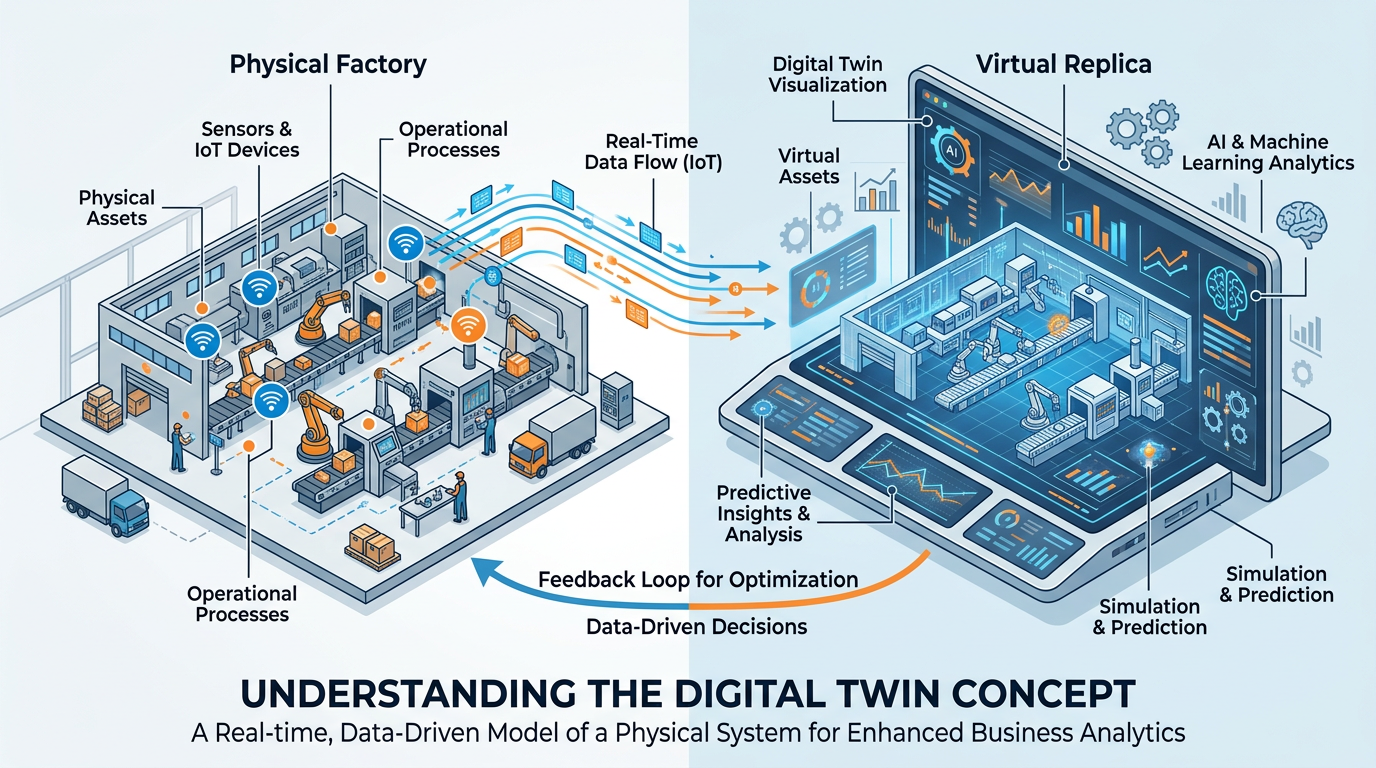
Figure 3:The digital twin paradigm — IoT sensors on physical assets stream real-time data to virtual replicas, enabling AI-powered analysis, prediction, and optimization without disrupting real-world operations.
2.2How Digital Twins Work
The digital twin architecture involves three interconnected layers:
2.3Digital Twin Applications Across Industries
Predictive Maintenance and Process Optimization
Siemens uses digital twins of its gas turbines to predict maintenance needs 3-6 months in advance, reducing unplanned downtime by 20%
General Electric maintains digital twins of jet engines that process data from 40+ sensors per engine across its fleet, predicting component failures before they occur
BMW creates digital twins of entire production lines before building them physically, testing and optimizing configurations virtually to reduce ramp-up time by 30%
ROI: McKinsey estimates that digital twins in manufacturing can reduce maintenance costs by 10-40% and improve equipment uptime by 10-20%.
Personalized Treatment and Drug Discovery
Patient digital twins model individual physiology to simulate drug responses before administration, enabling truly personalized medicine
Siemens Healthineers creates digital twins of the human heart to simulate cardiac procedures, allowing surgeons to plan and rehearse complex operations
Pharmaceutical companies use digital twins of clinical trials to identify optimal drug dosages and predict side effects, potentially reducing drug development timelines by years
The vision: A future where every patient has a digital twin that their medical team can use to test treatments virtually before applying them physically.
Urban Planning and Infrastructure Management
Singapore maintains a complete digital twin of the entire city-state, used for urban planning, traffic optimization, and emergency response simulation
Helsinki uses digital twins for energy optimization across city buildings, reducing energy consumption by 10-15%
Las Vegas deployed digital twins of its traffic infrastructure to optimize signal timing, reducing travel times by 12%
Sustainability impact: Digital twins of city infrastructure enable planners to simulate the impact of climate change, test mitigation strategies, and optimize resource usage.
End-to-End Visibility and Simulation
Amazon uses digital twins of its fulfillment network to simulate demand scenarios and optimize warehouse placement
Unilever created a digital twin of its supply chain that reduced planning cycles from weeks to hours
Maersk maintains digital twins of its container fleet to optimize shipping routes and predict vessel maintenance needs
Why it matters: Supply chains are complex, global, and vulnerable to disruption. Digital twins provide the visibility and simulation capability needed to anticipate problems and test solutions before they affect real operations.
3Supply Chain AI: Intelligent Logistics
3.1The Supply Chain Revolution
The COVID-19 pandemic exposed the fragility of global supply chains in ways that no business school case study ever could. Companies that had optimized for efficiency — just-in-time inventory, single-source suppliers, minimal safety stock — found themselves unable to meet demand. The companies that fared best were those with AI-powered supply chain visibility and adaptability.
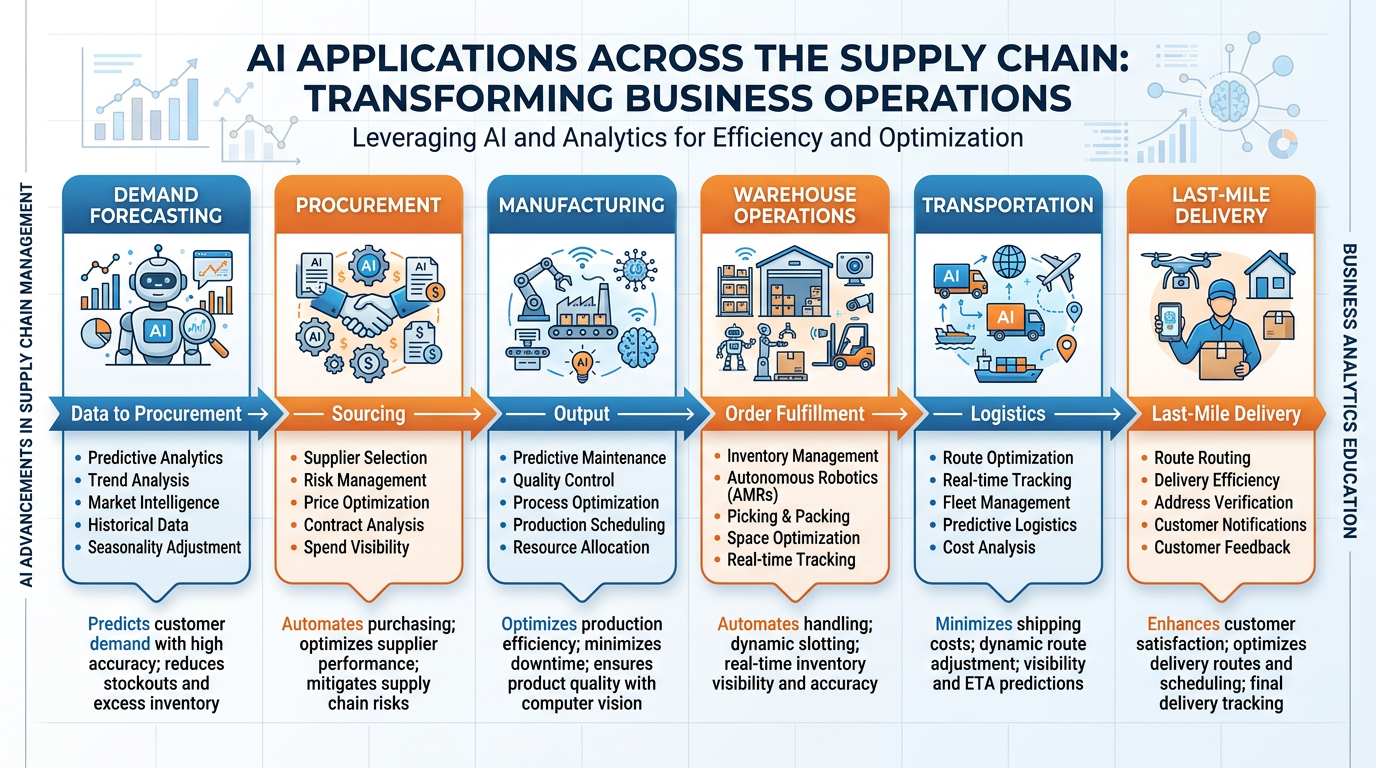
Figure 4:AI transforms every stage of the supply chain — from demand forecasting and procurement to warehouse operations and last-mile delivery, creating intelligent, adaptive, and resilient logistics networks.
3.2AI Applications Across the Supply Chain
Table 1:AI in Supply Chain Management
Supply Chain Stage | AI Application | Business Impact | Example |
|---|---|---|---|
Demand Forecasting | ML models analyzing sales, weather, events, social media | 20-50% reduction in forecast error | Walmart uses AI to forecast demand for 500M+ items across 10,500 stores |
Inventory Optimization | Reinforcement learning for dynamic safety stock levels | 15-30% reduction in inventory costs | Zara uses AI to maintain 85% sell-through rates |
Supplier Management | NLP analysis of news, financial data, risk indicators | Early warning of supplier disruptions | Resilinc monitors 400K+ supplier sites for risk signals |
Warehouse Operations | Computer vision, robotics, route optimization | 25-40% productivity improvement | Amazon’s 750,000+ warehouse robots |
Transportation & Routing | Dynamic route optimization considering traffic, weather, constraints | 10-15% reduction in transportation costs | UPS ORION saves 100M+ miles/year |
Last-Mile Delivery | AI scheduling, drone delivery, autonomous vehicles | 30% faster delivery times | FedEx SameDay bots for autonomous delivery |
Quality Control | Computer vision inspection at production and receiving | 90%+ defect detection rate | Foxconn’s AI vision systems inspect electronics components |
3.3Demand Forecasting: The Foundation
Accurate demand forecasting is the foundation of effective supply chain management. Traditional statistical methods (moving averages, exponential smoothing) struggle with the complexity of modern markets. AI-powered forecasting models incorporate:
Historical sales data — patterns, seasonality, trends
External signals — weather forecasts, economic indicators, social media sentiment
Event data — promotions, holidays, competitor actions, cultural events
Real-time signals — web traffic, search trends, point-of-sale data
Case Study: How Walmart Uses AI for Demand Forecasting
Walmart manages one of the world’s most complex supply chains: 10,500+ stores across 19 countries, 500 million+ unique items, and $600+ billion in annual revenue.
Walmart’s AI forecasting system processes:
Point-of-sale data from every register in real time
Weather data for every store location
Local event calendars (concerts, sports, festivals)
Social media trends and sentiment
Macroeconomic indicators
The system generates demand forecasts at the individual item-store-day level, enabling:
Shelf optimization — ensuring the right products are in the right stores
Dynamic pricing — adjusting prices based on predicted demand
Waste reduction — particularly critical for perishable foods
Labor scheduling — matching staffing levels to expected customer traffic
Walmart reports that AI-powered forecasting has reduced food waste by millions of tons annually while simultaneously improving product availability.
3.4Blockchain and Supply Chain Transparency
AI and blockchain together create powerful supply chain transparency:
Provenance tracking — Verify the origin of products (e.g., ensuring “organic” produce is genuinely organic)
Anti-counterfeiting — Authenticate products through blockchain-verified supply chains
Automated compliance — Smart contracts automatically enforce regulatory requirements
Dispute resolution — Immutable records reduce disputes between supply chain partners
Sustainability verification — Track and verify carbon footprints, ethical sourcing, and environmental compliance
4Healthcare AI: Transforming Medicine
4.1The Healthcare AI Landscape
Healthcare represents one of the most impactful — and most complex — domains for AI application. The potential to save lives, reduce suffering, and improve access to care is enormous, but so are the challenges: data privacy, regulatory compliance, algorithmic bias, and the irreducible importance of the human doctor-patient relationship.
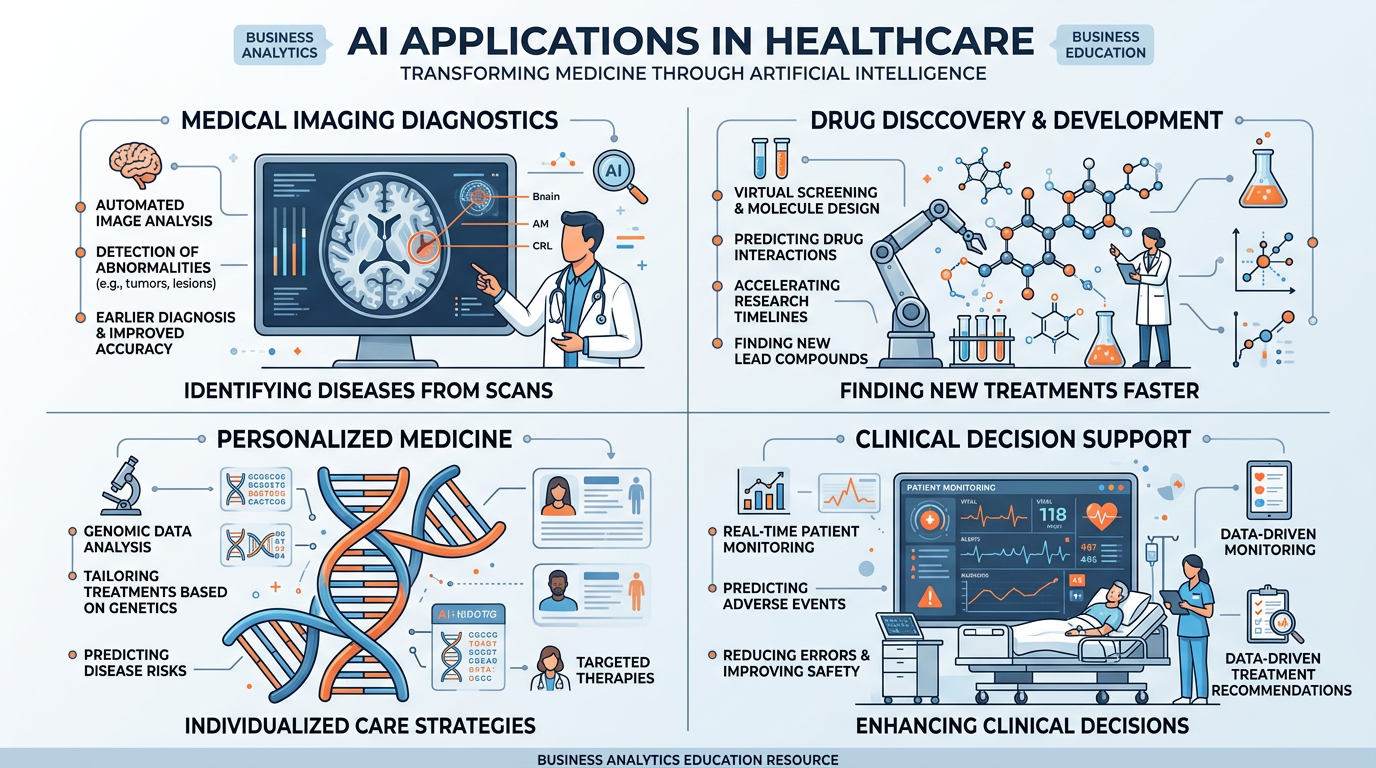
Figure 5:AI applications in healthcare span the full spectrum from administrative automation to clinical decision support, medical imaging, drug discovery, and personalized medicine.
4.2Key Healthcare AI Applications
AI systems analyze medical images (X-rays, MRIs, CT scans, pathology slides) to detect diseases:
Radiology: AI detects lung nodules, brain tumors, and fractures with accuracy matching or exceeding radiologists in specific tasks
Pathology: AI analyzes tissue samples to detect cancer cells, grading tumors with high precision
Ophthalmology: Google’s AI system detects diabetic retinopathy from retinal scans with 90%+ accuracy
Dermatology: AI classifies skin lesions, detecting melanoma with dermatologist-level accuracy
Key insight: AI does not replace radiologists — it augments them. “AI won’t replace radiologists, but radiologists who use AI will replace radiologists who don’t.”
AI dramatically accelerates drug development:
Target identification: AI identifies potential drug targets from genomic data
Molecule design: Generative AI designs novel drug molecules with desired properties
Clinical trial optimization: AI identifies optimal patient populations and trial designs
Drug repurposing: AI identifies existing drugs that may treat new conditions
Case: Insilico Medicine used AI to discover a novel drug candidate for idiopathic pulmonary fibrosis — from target identification to preclinical candidate in just 18 months, compared to the industry average of 4-5 years. The drug is now in Phase II clinical trials.
AI enables treatment tailored to individual patients:
Genomic analysis: AI interprets genetic data to predict disease risk and drug responses
Treatment selection: AI recommends optimal treatments based on patient genetics, medical history, and similar cases
Dosage optimization: AI calculates personalized drug dosages based on individual metabolism
Companion diagnostics: AI-powered tests that determine which patients will benefit from specific treatments
The vision: Moving from “one-size-fits-all” medicine to treatments customized to each patient’s unique biology — what some call “N-of-1 medicine.”
AI assists healthcare providers in real time:
Early warning systems: AI monitors vital signs to predict deterioration (sepsis, cardiac arrest) hours before clinical symptoms appear
Clinical documentation: AI transcribes and summarizes patient encounters, reducing physician documentation burden by 50%+
Prior authorization: AI automates insurance pre-authorization processes
Readmission prediction: AI identifies patients at high risk of readmission for proactive intervention
Case: Epic Systems’ sepsis prediction model monitors patients across thousands of hospitals, alerting clinicians to deterioration up to 6 hours before clinical recognition — enough time to intervene and save lives.
4.3Personalized Medicine: A Deeper Look
Personalized medicine represents the convergence of AI, genomics, and data science to create treatments tailored to individual patients. This approach recognizes that patients respond differently to the same treatment based on their genetic makeup, lifestyle, environment, and other factors.
5AI and Entrepreneurship
5.1The Great Equalizer
AI is fundamentally transforming entrepreneurship by democratizing capabilities that were previously available only to large enterprises with significant technical resources. A single entrepreneur with AI tools can now accomplish what previously required a team of ten or more.
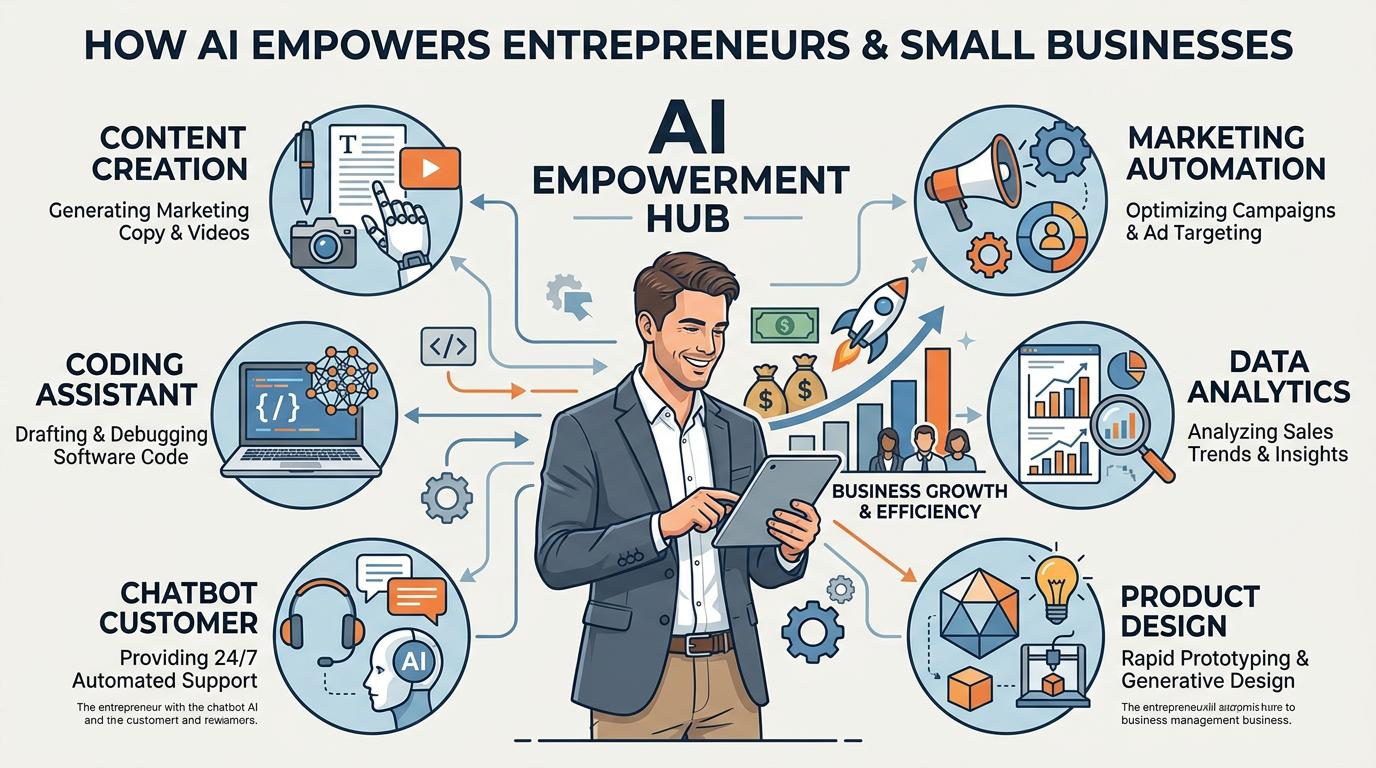
Figure 6:AI as the great equalizer — enabling solo entrepreneurs and small teams to access enterprise-grade capabilities in content creation, development, marketing, customer service, and data analysis.
How AI enables entrepreneurship:
AI accelerates every phase of product development:
Idea validation: AI analyzes market data, trends, and competitor landscapes
Prototyping: AI code assistants (Cursor, GitHub Copilot) enable non-programmers to build software products
Design: AI generates logos, marketing materials, UI mockups
Testing: AI generates test cases and identifies bugs
Iteration: AI analyzes user feedback and suggests improvements
Case: A solo developer used AI coding assistants to build and launch a SaaS product in 6 weeks that previously would have required a 3-person team working for 6 months. The product reached $10,000 in monthly recurring revenue within 90 days.
AI transforms marketing from expensive guesswork to data-driven precision:
Content creation: AI generates blog posts, social media content, email campaigns
SEO optimization: AI analyzes search trends and optimizes content
Ad targeting: AI identifies and targets optimal customer segments
Personalization: AI customizes messaging for individual prospects
Sales automation: AI qualifies leads and schedules meetings
Impact: Small businesses using AI marketing tools report 40-60% reduction in marketing costs with improved conversion rates.
AI enables 24/7 customer service without hiring:
Chatbots handle common inquiries automatically
Email automation prioritizes and drafts responses
Sentiment analysis identifies unhappy customers for proactive outreach
Knowledge bases are automatically maintained and updated
Example: A 2-person e-commerce business deployed an AI chatbot that handles 80% of customer inquiries, saving the equivalent of 1.5 full-time employees.
AI automates back-office operations:
Bookkeeping — AI categorizes transactions and generates reports
Invoicing — Automated invoice generation and payment tracking
Legal — AI reviews contracts and identifies risks
HR — AI screens resumes and schedules interviews
Compliance — AI monitors regulatory changes and flags requirements
The one-person company: AI is enabling the rise of “one-person companies” that generate millions in revenue with minimal staff, using AI to automate everything from product development to customer service.
5.2AI Business Opportunities
Table 2:Emerging AI Business Opportunities
Opportunity Area | Description | Barrier to Entry | Revenue Potential |
|---|---|---|---|
AI Consulting | Help businesses implement AI solutions | Medium (requires expertise) | $150-500K/year |
AI-Powered SaaS | Build software products with AI capabilities | Medium-High (requires development) | Scalable (potentially millions) |
AI Content Agency | Create content using AI tools | Low | $50-200K/year |
AI Training & Education | Teach businesses how to use AI | Low-Medium | $100-300K/year |
AI Integration Services | Connect AI tools with existing business systems | Medium | $200-500K/year |
Vertical AI Solutions | AI tools for specific industries (legal, medical, real estate) | High (domain expertise needed) | Scalable (potentially millions) |
6The Future of Work: Transformation, Not Elimination
6.1Understanding Workforce Transformation
The AI revolution’s impact on work is frequently mischaracterized as a binary — either AI will eliminate all jobs (apocalyptic) or AI won’t change anything (dismissive). The reality is more nuanced and more interesting: AI is transforming the nature of work, not eliminating it.
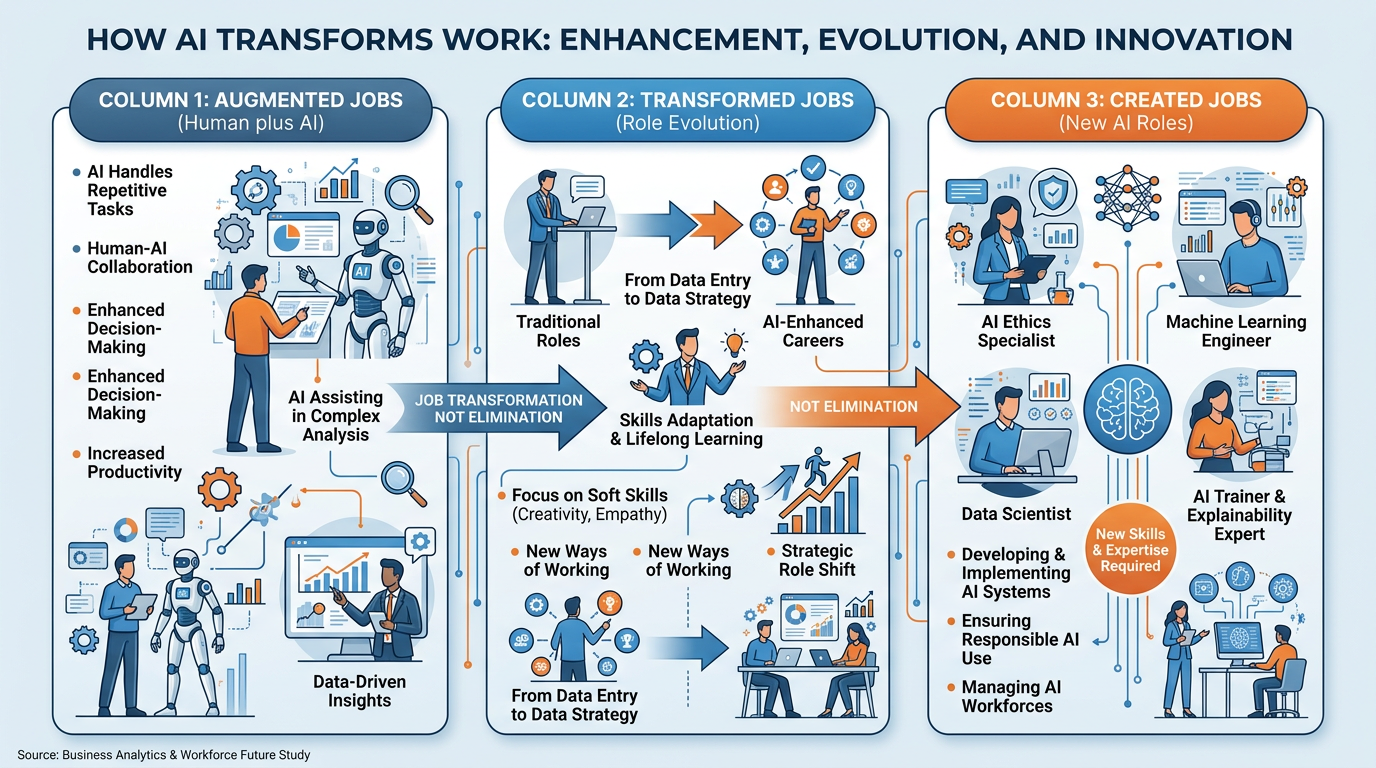
Figure 7:The AI workforce transformation — jobs are not simply created or destroyed but fundamentally reorganized, with routine cognitive tasks automated while uniquely human capabilities become more valuable.
Key research findings on AI and employment:
Table 3:AI Employment Impact Research
Source | Finding | Timeframe |
|---|---|---|
World Economic Forum (2024) | 85M jobs displaced, 97M created (net +12M) | By 2027 |
McKinsey Global Institute | 30% of work hours could be automated with current AI | Current |
Goldman Sachs | Generative AI could affect 300M full-time jobs globally | Next decade |
MIT/Stanford Research | AI augmentation increases worker productivity 14-35% | Current observed |
OECD Employment Outlook | 27% of jobs at high risk of AI automation | Next 15-20 years |
6.2The Task Automation Framework
The key insight from labor economics research is that AI automates tasks, not jobs. Most jobs consist of a bundle of tasks — some of which can be automated and some of which cannot. This leads to three outcomes:
Human + AI Collaboration
Tasks are shared between humans and AI:
Doctor: AI reads scans, human makes treatment decisions
Lawyer: AI reviews documents, human develops strategy
Teacher: AI grades assignments, human mentors students
Manager: AI generates reports, human leads teams
Result: Higher productivity, more focus on high-value work
Fundamentally Changed Roles
The core nature of the job shifts:
Marketing manager → AI orchestrator
Data analyst → AI prompt engineer + interpreter
Customer service → complex issue resolution
Accountant → strategic financial advisor
Result: New skills required, different daily activities
Entirely New Roles
Jobs that didn’t exist before AI:
AI Ethics Officer
Prompt Engineer
AI Trainer / RLHF Specialist
AI-Human Interaction Designer
Machine Learning Operations (MLOps) Engineer
AI Safety Researcher
Digital Twin Architect
Result: New career paths, new educational requirements
6.3Skills for the AI Era
The skills that matter most in an AI-powered economy:
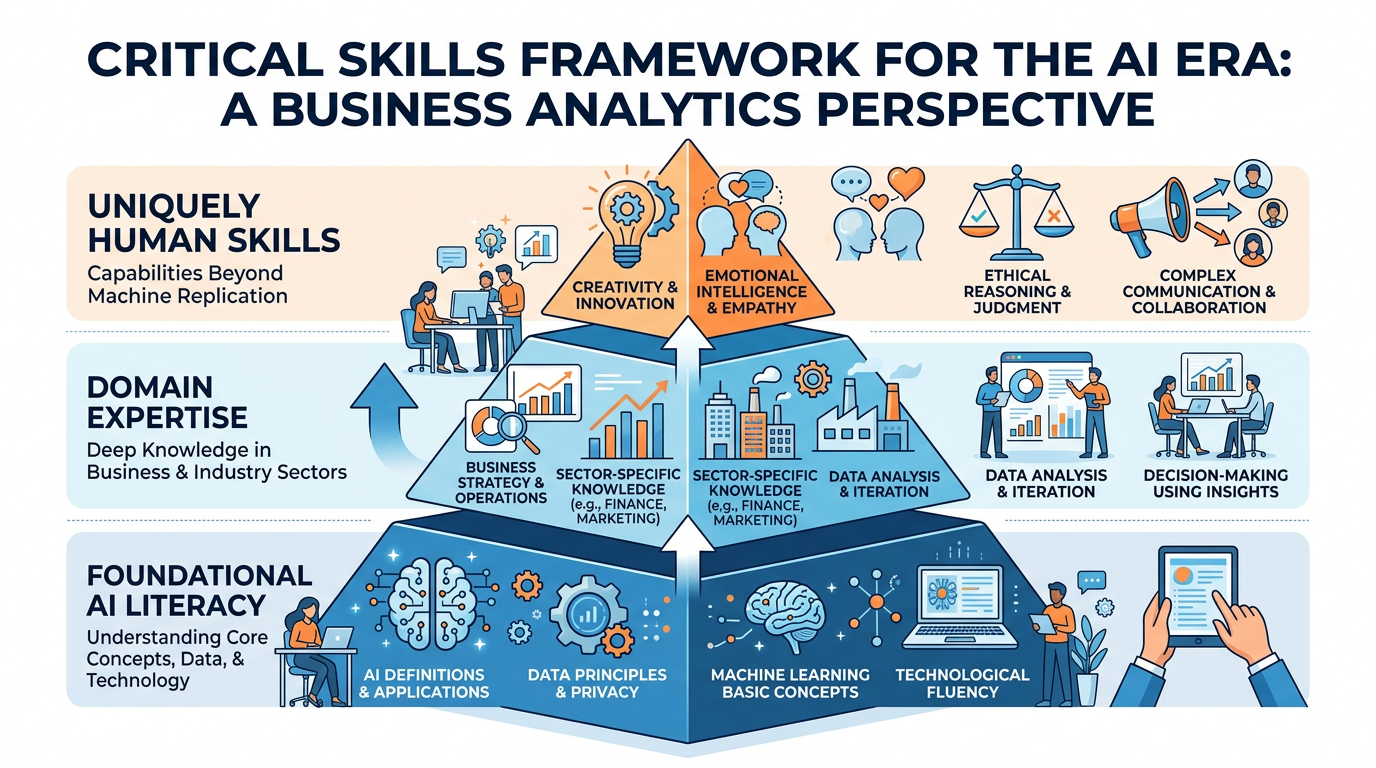
Figure 8:The AI-era skills pyramid — foundational AI literacy supports domain expertise, which is topped by the uniquely human capabilities that become more valuable as AI automates routine cognitive tasks.
Table 4:Critical Skills for the AI Era
Skill Category | Specific Skills | Why AI Can’t Replace This |
|---|---|---|
Critical Thinking | Analysis, evaluation, judgment, strategic thinking | AI generates options; humans evaluate and decide |
Creativity & Innovation | Novel problem-solving, design thinking, artistic creation | AI remixes patterns; humans create genuinely new concepts |
Emotional Intelligence | Empathy, leadership, conflict resolution, motivation | AI simulates empathy; humans genuinely connect |
Complex Communication | Persuasion, negotiation, storytelling, teaching | AI generates text; humans move hearts and minds |
AI Collaboration | Prompt engineering, AI output evaluation, human-AI workflow design | Uniquely human: knowing how to leverage AI effectively |
Ethical Reasoning | Values-based decision making, stakeholder consideration | AI optimizes metrics; humans weigh moral considerations |
Adaptability | Continuous learning, comfort with ambiguity, resilience | The meta-skill: learning faster than AI changes the landscape |
7Career Strategies for an AI-Powered World
7.1The AI Career Framework
Preparing for a career in the AI era requires a proactive, strategic approach. The following framework provides a structured way to think about career development:
7.2Practical Career Strategies
Universal strategies regardless of field:
Become AI-literate — Understand how AI works at a conceptual level, even if you never code
Master prompt engineering — The ability to communicate effectively with AI is becoming as fundamental as email literacy
Develop a “human+” skillset — Combine domain expertise with AI tools to become exponentially more productive
Build an AI portfolio — Document projects where you’ve used AI to create value
Stay informed — Follow AI developments in your industry (newsletters, podcasts, conferences)
Network across disciplines — The best AI applications come from combining technical and domain knowledge
Embrace continuous learning — The half-life of technical skills is shrinking; learning how to learn is the meta-skill
Specific strategies for business professionals:
Data literacy — Understand data collection, analysis, and visualization
AI strategy — Learn to evaluate AI investments and implementation plans
Change management — Become skilled at leading organizations through AI transformation
Vendor evaluation — Develop the ability to assess AI products and services critically
ROI analysis — Learn to measure and communicate the business value of AI initiatives
AI governance — Understand frameworks for responsible AI deployment
Industry specialization — Deep knowledge of a specific industry + AI literacy = high value
For those pursuing technology-focused paths:
Programming fundamentals — Python, SQL, and basic data manipulation
ML/AI foundations — Understanding of key algorithms and when to apply them
Cloud platforms — AWS, GCP, or Azure AI services
MLOps — Deploying, monitoring, and maintaining AI systems in production
AI security — Understanding adversarial attacks and defenses (see Chapter 7)
Specialization — Focus on a specific AI domain (NLP, computer vision, robotics, etc.)
Ethics and governance — Technical implementation of responsible AI principles
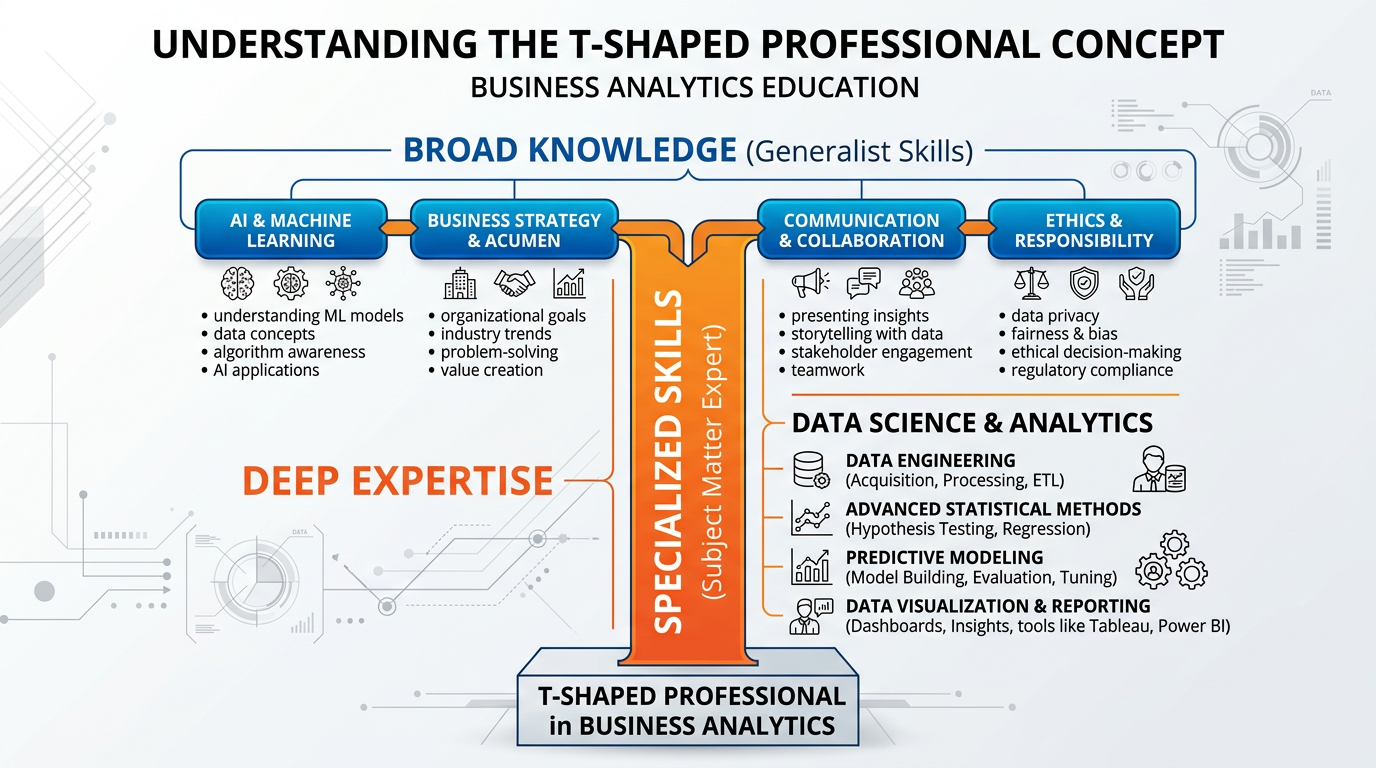
Figure 9:The T-shaped professional — broad cross-functional knowledge combined with deep expertise in one specific domain creates the most valuable profile in the AI era.
8The Christian Perspective: Flourishing in an Age of AI
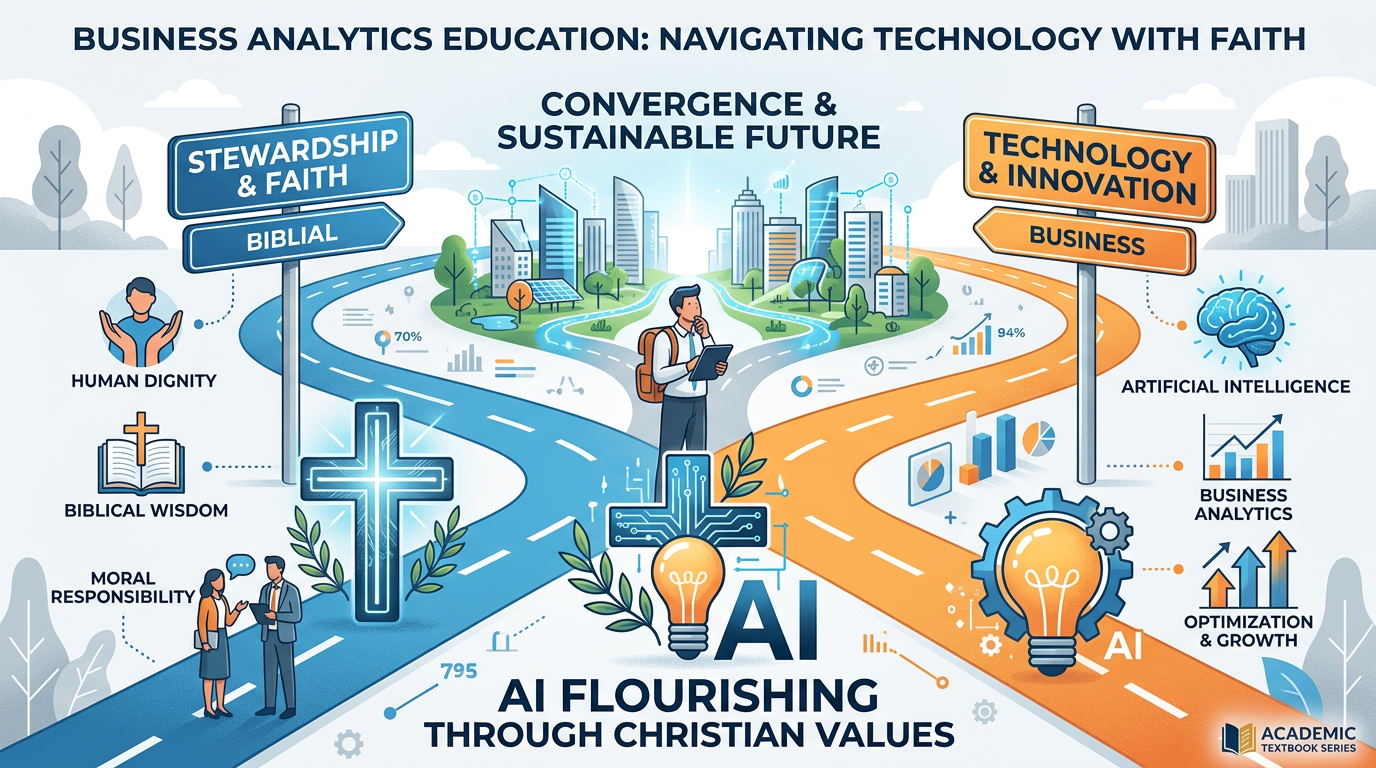
Figure 10:Faith and technology converging — Christian values of stewardship, wisdom, and human dignity provide an essential moral compass for navigating the AI revolution with purpose and principle.
8.1Called to Flourish
As we conclude this course, it is fitting to reflect on what it means to flourish — as individuals, as professionals, and as people of faith — in an age of artificial intelligence.
The Christian understanding of human flourishing goes far beyond economic productivity or career success. The Hebrew concept of shalom — comprehensive peace, wholeness, and well-being — encompasses right relationships with God, with other people, with ourselves, and with creation. Technology, including AI, serves human flourishing when it strengthens these relationships and undermines it when it weakens them.
“I came that they may have life, and have it abundantly.”
John 10:10 (ESV)
8.2AI as a Tool for Human Flourishing
When deployed wisely and ethically, AI can contribute to human flourishing in profound ways:
Healthcare AI can extend and improve human life — fulfilling the healing ministry that Jesus modeled
Supply chain AI can reduce waste and ensure that resources reach those who need them — addressing the needs of “the least of these” (Matthew 25:40)
Educational AI can personalize learning and expand access to knowledge — echoing Proverbs 18:15, “The heart of the discerning acquires knowledge”
Chatbots and assistive AI can provide support and information to isolated, elderly, or disabled individuals — bearing one another’s burdens (Galatians 6:2)
8.3The Dangers of Idolatry
But AI also presents spiritual dangers. When we place excessive trust in technology — when we treat AI as an oracle rather than a tool — we risk a form of technological idolatry. The Psalmist’s warning about idols applies equally to our digital creations: “They have mouths, but cannot speak, eyes, but cannot see” (Psalm 115:5). AI systems can process information but cannot understand. They can generate text but cannot mean. They can simulate empathy but cannot love.
The antidote to technological idolatry is not Luddite rejection but wise discernment — using technology as a tool in service of genuinely human and divine purposes, while never confusing the tool with the purpose it serves.
8.4Your Calling as AI-Era Business Leaders
As you graduate and enter the workforce, you carry a distinctive calling. You are business professionals equipped with both technical AI literacy and Christian moral wisdom. The world needs both, desperately.
You will face decisions about:
Whether to automate jobs — and how to care for affected workers
Whether to deploy AI in healthcare — and how to ensure equitable access
Whether to use AI for surveillance — and how to protect human privacy and dignity
Whether to pursue AI-driven profit — and how to balance profit with purpose
In each case, your faith provides not a rulebook of easy answers but a compass pointing toward justice, mercy, and humility (Micah 6:8). Your AI education provides the technical literacy to make informed decisions. Together, they equip you to lead wisely in an age of unprecedented technological change.
9Module Activities
9.1💬 Discussion: My Career in an AI World
9.2📄 Written Analysis: AI Transformation Strategy
9.3🙏 Reflection: Flourishing in an Age of AI
9.4🔧 Hands-On Activity 1: Build a No-Code Chatbot with Gemini
9.5🔧 Hands-On Activity 2: Personal AI Career Strategy
10Key Terms and Concepts
Chatbot A software application that simulates human conversation through text or voice interactions, using NLP and AI to understand user intent and provide relevant responses.
Knowledge Base A structured repository of domain-specific information that grounds a chatbot’s responses in factual, current data. Often implemented through RAG (Retrieval-Augmented Generation) systems.
Retrieval-Augmented Generation (RAG) A technique that enhances LLM responses by first retrieving relevant documents from a knowledge base, then using that information to generate grounded, factual responses.
Digital Twin A virtual representation of a physical object, process, or system that is continuously updated with real-time data from its physical counterpart, enabling analysis, prediction, and optimization.
Internet of Things (IoT) A network of physical devices embedded with sensors, software, and connectivity that enables them to collect and exchange data. IoT provides the real-time data feeds that power digital twins.
Demand Forecasting The process of predicting future customer demand using historical data, market signals, and AI models. Accurate forecasting is the foundation of effective supply chain management.
Blockchain A distributed, immutable digital ledger that records transactions across a network of computers, providing transparent, tamper-resistant tracking of goods and transactions.
Personalized Medicine A medical approach that uses AI, genomics, and patient data to tailor treatments, dosages, and monitoring plans to individual patients rather than applying one-size-fits-all protocols.
Clinical Decision Support AI systems that assist healthcare providers by analyzing patient data in real time to provide diagnostic suggestions, treatment recommendations, and early warning alerts.
Drug Discovery The process of identifying and developing new pharmaceutical treatments. AI accelerates drug discovery by predicting drug-target interactions, designing novel molecules, and optimizing clinical trials.
AI Literacy The ability to understand, evaluate, and effectively use AI systems — encompassing knowledge of how AI works, prompt engineering skills, critical evaluation of AI outputs, and understanding of AI limitations and ethics.
Prompt Engineering The skill of crafting effective inputs (prompts) for AI systems to produce desired outputs. Includes system prompt design, context management, and output formatting techniques.
T-Shaped Professional A professional with broad knowledge across multiple domains (the horizontal bar) combined with deep expertise in one specific area (the vertical bar) — an increasingly valued profile in the AI era.
Workforce Transformation The process by which AI changes the nature of work — automating specific tasks within jobs, creating new roles, and shifting the skills required for existing roles.
Task Automation The automation of specific tasks within a job rather than the entire job, leading to job augmentation and transformation rather than wholesale elimination.
Agentic AI AI systems capable of autonomous planning, tool use, and multi-step task execution — representing the next evolution beyond conversational chatbots.
Supply Chain AI The application of artificial intelligence across supply chain operations including demand forecasting, inventory optimization, logistics routing, and supplier management.
Shalom The Hebrew concept of comprehensive peace, wholeness, and well-being — encompassing right relationships with God, people, self, and creation. A framework for evaluating whether technology contributes to genuine human flourishing.
11Chapter Summary
This capstone chapter explored four transformative AI application areas and prepared you for career success in an AI-powered world.
Chatbot design has evolved from simple rule-based systems to sophisticated AI assistants powered by LLMs and RAG systems. Effective chatbots require careful engineering across multiple components — NLU, knowledge bases, conversation management, and business system integration — and must be designed with both user experience and business metrics in mind.
Digital twins create virtual replicas of physical assets and systems, enabling predictive maintenance, process optimization, and scenario planning across manufacturing, healthcare, smart cities, and supply chains. As IoT sensors and AI models improve, digital twins will become standard tools for business operations.
Supply chain AI transforms logistics through intelligent demand forecasting, inventory optimization, routing, and quality control. Combined with blockchain for transparency, AI creates supply chains that are more resilient, efficient, and responsive than ever before.
Healthcare AI represents one of the most impactful application domains — from medical imaging diagnostics and drug discovery to personalized medicine and clinical decision support. The potential to save lives is enormous, but so is the responsibility to ensure equity, privacy, and human oversight.
AI and entrepreneurship are creating unprecedented opportunities for individuals and small teams to build businesses with capabilities that once required large organizations. AI tools democratize product development, marketing, customer service, and operations.
The future of work is transformation, not elimination. AI automates tasks within jobs, creating augmented roles, transformed roles, and entirely new careers. The skills that matter most — critical thinking, creativity, emotional intelligence, ethical reasoning, and adaptability — are uniquely human.
As Christian business professionals, you carry a distinctive calling: to use AI wisely, ethically, and in service of human flourishing. Your technical AI literacy, combined with your moral and spiritual formation, equips you to be the kind of leaders the world desperately needs.
This course has been a beginning, not an end. The AI revolution is accelerating. Stay curious. Stay ethical. Stay faithful. And go build something that matters.
“For we are God’s handiwork, created in Christ Jesus to do good works, which God prepared in advance for us to do.” — Ephesians 2:10 (NIV)